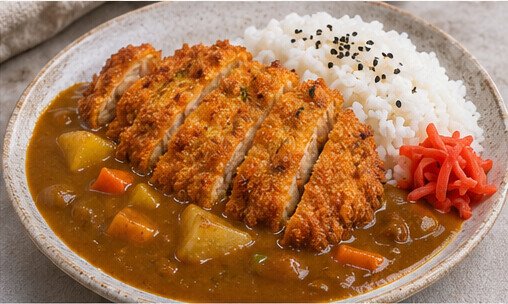
Chicken katsu curry pairs a crunchy breaded cutlet with a mild, savory curry sauce and steamed rice. This version keeps the components separate until serving: the chicken stays crisp, the sauce can be adjusted to taste, and everyone can choose how much to spoon over the plate. Thin, evenly pounded cutlets cook quickly, while panko creates a light, craggy crust that remains appealing beside the sauce.
Why This Method Works
The curry and cutlets use different cooking temperatures, so making the sauce first is practical. It can simmer while the rice cooks, then stay warm over low heat. The cutlets are breaded in flour, egg and panko, which helps the coating adhere and brown. Resting the cooked chicken briefly on a rack prevents steam from softening the underside.
This recipe is written for a standard home kitchen, with visual and texture cues alongside the timing. Pan size, ingredient temperature and stove strength all affect how quickly food cooks, so use the stated minutes as a guide rather than a substitute for checking the dish. Prep the ingredients before cooking and make small adjustments at the end; that approach is more reliable than trying to correct a sauce or texture after it has gone too far.
Ingredients
Makes: 4 servings | Active prep: 35 minutes | Cooking: 35 minutes. Gather and measure everything before you begin.
- 4 boneless skinless chicken breasts, about 150–180 g each
- ½ tsp fine salt and ½ tsp black pepper
- 60 g all-purpose flour
- 2 large eggs, beaten
- 120 g panko breadcrumbs
- Neutral oil for shallow frying
- 1 tbsp butter or oil
- 1 onion, diced
- 1 carrot, diced and 1 potato, peeled and cubed
- 2 tbsp mild curry powder
- 1 tbsp flour
- 500 ml chicken stock
- 1 tbsp soy sauce
- 1 tsp honey or sugar, optional
- Steamed short-grain rice and sliced scallions
Ingredient notes
- Panko flakes are larger and lighter than standard breadcrumbs. Press them gently onto the chicken so they cover the surface without becoming a dense shell.
- Japanese curry powder or curry roux blocks are milder and sweeter than many Indian curry blends. If using a different blend, start with less and taste.
- Cut vegetables into small, similar pieces so they soften together. Potatoes release starch and help give the sauce body.
- Use a neutral oil with a high smoke point for frying, and keep a thermometer or a small breadcrumb nearby to judge the oil temperature.
Equipment and Prep
A meat mallet or rolling pin helps flatten the chicken to an even thickness. Use three shallow dishes for flour, egg and panko, plus a wide heavy skillet for frying. A wire rack set over a sheet pan keeps the crust crisp after cooking. For a less hands-on meal, the curry can simmer in a saucepan while rice cooks in a rice cooker or covered pot.
Before cooking, read through the method once and organize ingredients in the order you will use them. Keep raw meat and seafood separate from ready-to-eat toppings, and wash hands, boards and utensils after they touch raw ingredients. A thermometer is useful for checking poultry; remove it from the heat when the thickest piece reaches a safe temperature. For stovetop recipes, medium heat is a starting point, not a fixed setting: lower it if food darkens before it softens, and raise it only when the pan is dry and ready to sear.
Step-by-Step Method
1. Simmer the curry vegetables
Start the curry. Melt butter in a saucepan over medium heat and cook onion for 5 minutes until soft. Add carrot and potato, then stir in curry powder and flour. Cook briefly so the spices bloom and the flour coats the vegetables.
2. Thicken the curry sauce
Gradually pour in stock while stirring to prevent lumps. Add soy sauce and honey if using. Simmer gently for 20–25 minutes, stirring occasionally, until the vegetables are tender and the sauce lightly coats a spoon. Keep the lid partly open.
3. Pound and season chicken
Meanwhile, place each chicken breast between parchment and pound to about 1.5 cm thick. Pat dry and season both sides with salt and pepper. Set up flour, beaten eggs and panko in separate shallow dishes.
4. Bread the cutlets
Coat each cutlet in flour, shake away excess, dip in egg, then press into panko on both sides. Use one hand for dry ingredients and one for egg if you want to keep fingers cleaner. Let breaded cutlets rest for 5 minutes so the coating adheres.
5. Fry until crisp and cooked
Heat about 1 cm of oil in a wide skillet to roughly 175°C/350°F. Fry one or two cutlets at a time for 3–4 minutes per side, adjusting heat to keep the oil steady. The crust should become deep golden; the center should reach 74°C/165°F.
6. Rest and slice the katsu
Transfer cutlets to a rack, not paper towels, and rest for 3 minutes. If cooking in batches, keep them in a low oven on the rack. Slice across the grain just before serving to show the crisp coating.
7. Assemble the curry bowls
Spoon rice into bowls, add curry alongside, and place sliced katsu on top or at the edge. Keep some crust above the sauce so it remains crunchy. Finish with scallions or pickled vegetables if desired.
Texture and Troubleshooting
Use these adjustments to diagnose the most common changes that can happen in a home kitchen. First identify whether the issue is moisture, heat or seasoning. Changing one factor at a time makes it easier to recover the dish and learn what to do next time.
- A coating that falls off usually means the chicken was wet, flour was left thick, or the cutlets were moved too soon. Pat dry, shake off excess flour and let breading rest.
- Dark crust with undercooked chicken means the oil is too hot or the cutlet too thick. Lower the temperature and pound the chicken evenly.
- If the curry is lumpy, whisk it steadily and simmer until smooth; blending the sauce after the vegetables soften also works.
- A thin curry can simmer uncovered; if it becomes too thick, add stock a little at a time.
Easy Variations
The basic method is flexible, but substitutions can change cooking time and moisture. Keep the core balance of salty, bright, rich and fresh flavors in mind. Add watery vegetables early enough for excess liquid to evaporate, and add delicate herbs or dairy near the end.
- Use boneless pork loin for tonkatsu-style curry, adjusting the cooking time to the thickness and checking that it is cooked through.
- For a vegetarian plate, bread thick slices of eggplant and roast or shallow-fry until tender, then serve with the same curry sauce.
- Add a teaspoon of grated apple to the curry for gentle sweetness, or omit the honey for a more savory sauce.
Serving, Storage and Reheating
Serve katsu curry in a wide bowl with rice on one side, curry on the other and sliced chicken arranged on top. Pickled ginger, quick-pickled cucumber or a simple cabbage slaw add crunch and acidity. Store curry and chicken separately for up to 3 days. Reheat the curry on the stove with a splash of stock; warm cutlets in a 190°C/375°F oven on a rack to bring back some crispness.
For food safety, refrigerate perishable leftovers within two hours, using shallow containers so they cool quickly. Reheat only the portion you plan to eat and bring it until steaming hot throughout. If the dish contains meat, use a food thermometer where practical rather than relying on color alone. These simple steps help preserve texture while keeping make-ahead meals easy to manage.
Recipe at a glance
Yield: 4 servings. Prep: 35 minutes. Cook: 35 minutes. Total time: 1 hour 10 minutes. Start by preparing and measuring the ingredients, follow the cooking order above, then taste and finish with the suggested toppings just before serving.
Frequently Asked Questions
Can I bake chicken katsu instead of frying it?
Yes. Spray or drizzle the panko-coated cutlets lightly with oil and bake on a rack at 220°C/425°F, turning once. The color may be less even than frying, but the crust will still crisp.
Can I use curry roux blocks?
Yes. Follow the package quantity for the amount of liquid, and add the blocks after the vegetables are tender. They usually contain flour and seasoning, so skip the extra flour and adjust salt carefully.
How do I keep katsu crisp next to curry?
Serve sauce beside or underneath the cutlet rather than covering every piece. A wire rack is also better than a plate for resting fried chicken.
What rice works best?
Short-grain Japanese rice is tender and slightly sticky, making it easy to pick up with curry. Basmati also works if that is what you have.
This Japanese recipe is designed as a practical home-cooking guide. Adjust salt and heat to your ingredients and preferences, and use the texture cues in the method for the best result.