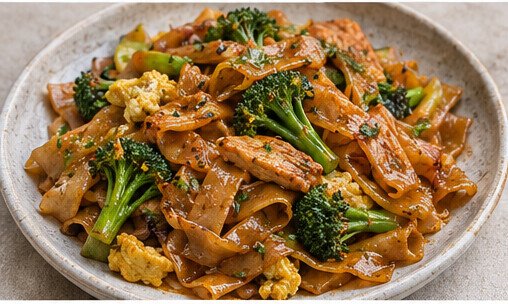
Pad see ew is a satisfying stir-fried noodle dish built around wide rice noodles, greens, egg and a savory soy-based sauce. This home recipe uses chicken and Chinese broccoli, with each ingredient cooked in stages so the pan stays hot. The signature contrast comes from tender noodles with a few browned edges, crisp-tender greens and a lightly sweet, salty sauce. Prepare every ingredient before turning on the stove; stir-frying moves quickly.
Why This Method Works
A home burner has less power than a restaurant wok station, so the best way to keep flavor and texture is to cook in small batches. Wet noodles can steam instead of sear, and too many ingredients cool the pan. Separating the chicken, greens, egg and noodles gives each one enough contact with the hot surface. The final sauce ties everything together without pooling in the bowl.
This recipe is written for a standard home kitchen, with visual and texture cues alongside the timing. Pan size, ingredient temperature and stove strength all affect how quickly food cooks, so use the stated minutes as a guide rather than a substitute for checking the dish. Prep the ingredients before cooking and make small adjustments at the end; that approach is more reliable than trying to correct a sauce or texture after it has gone too far.
Ingredients
Makes: 3–4 servings | Active prep: 25 minutes | Cooking: 12 minutes. Gather and measure everything before you begin.
- 300 g wide fresh rice noodles, or 250 g dried wide rice noodles
- 350 g boneless chicken thigh, thinly sliced
- 2 large eggs
- 200 g Chinese broccoli (gai lan), stems sliced and leaves cut
- 2 tbsp light soy sauce
- 1 tbsp dark soy sauce
- 1 tbsp oyster sauce
- 1 tbsp water
- 1 tsp sugar
- 2 garlic cloves, minced
- 2 tbsp neutral oil, divided
- White pepper and lime wedges to serve
Ingredient notes
- Fresh wide rice noodles often arrive stuck together. Separate them gently with your fingers; if firm, warm briefly according to package directions rather than soaking until mushy.
- Dried noodles should be soaked or boiled only until pliable, following the package. Drain well and toss lightly with oil if they must wait.
- Chinese broccoli stems take longer than leaves. Slice stems on a diagonal and add them before the leafy tops.
- Dark soy sauce adds color more than salt. Use a little at first, then taste; too much can make the noodles overly salty.
Equipment and Prep
A large carbon-steel wok is ideal, but a heavy wide skillet works well. A small bowl for sauce, a plate for cooked chicken and a spatula are helpful because the process is fast. Use tongs or chopsticks to separate noodles without breaking them. Keep an exhaust fan on and open a window if your pan gets very hot; brief smoke can occur when food sears.
Before cooking, read through the method once and organize ingredients in the order you will use them. Keep raw meat and seafood separate from ready-to-eat toppings, and wash hands, boards and utensils after they touch raw ingredients. A thermometer is useful for checking poultry; remove it from the heat when the thickest piece reaches a safe temperature. For stovetop recipes, medium heat is a starting point, not a fixed setting: lower it if food darkens before it softens, and raise it only when the pan is dry and ready to sear.
Step-by-Step Method
1. Mix the stir-fry sauce
Stir light soy, dark soy, oyster sauce, water and sugar together in a small bowl. Taste a drop; it should be savory with a little sweetness. Keep the sauce close to the stove so you can pour it in quickly.
2. Prepare noodles and vegetables
Separate the noodles, slice chicken thinly across the grain, and cut the Chinese broccoli. Keep stems and leaves in separate piles. Crack eggs into a cup and beat lightly. Once the wok is hot, there will be little time for chopping.
3. Brown the chicken
Heat half the oil over high heat until shimmering. Add chicken in a single layer and leave it undisturbed briefly to brown. Stir-fry until cooked through, then transfer to a clean plate. Avoid overcooking thin slices.
4. Cook the Chinese broccoli
Add a little more oil and the broccoli stems. Stir-fry for 1–2 minutes, then add leaves and garlic. Cook until the leaves wilt and stems are bright and crisp-tender. Remove to the plate with the chicken.
5. Scramble egg and sear noodles
Add the remaining oil and pour in the egg. Scramble it lightly, keeping some soft curds, then push it to one side. Add noodles and spread them across the hot surface. Let them sit for 20–30 seconds so a few edges caramelize.
6. Toss with sauce
Return chicken and greens to the pan. Pour the sauce around the hot edge and toss gently until the noodles are coated. Avoid constant stirring, which can break the noodles and prevent browning. Taste and adjust with a splash of soy or water.
7. Serve immediately
Serve immediately with white pepper and lime wedges. Pad see ew loses its spring as it sits, so warm bowls and have everyone ready before the final toss.
Texture and Troubleshooting
Use these adjustments to diagnose the most common changes that can happen in a home kitchen. First identify whether the issue is moisture, heat or seasoning. Changing one factor at a time makes it easier to recover the dish and learn what to do next time.
- Mushy noodles mean they were over-softened before stir-frying. Cook them only until flexible and let the hot pan finish them.
- A wet pan often comes from vegetables that were not drained or a crowded wok. Pat greens dry and cook in two batches.
- If the sauce is too dark or salty, add a small splash of water and more noodles or greens; do not add extra dark soy.
- Broken noodles can result from rough tossing. Use broad spatula movements or tongs and avoid pressing down.
Easy Variations
The basic method is flexible, but substitutions can change cooking time and moisture. Keep the core balance of salty, bright, rich and fresh flavors in mind. Add watery vegetables early enough for excess liquid to evaporate, and add delicate herbs or dairy near the end.
- Swap chicken for thinly sliced beef, tofu or shrimp; cook each protein separately and return it with the vegetables.
- If Chinese broccoli is unavailable, use broccolini or regular broccoli stems with spinach leaves added near the end.
- Add a small pinch of chili flakes at the table rather than overwhelming the mild noodle sauce.
Serving, Storage and Reheating
Pad see ew is best served as soon as it leaves the wok. Add lime at the table and offer chili flakes or a mild vinegar-chili condiment separately. If you have leftovers, refrigerate within 2 hours and eat within 2 days. Reheat in a hot skillet with a tablespoon of water, tossing just until steaming; the texture will be softer than when freshly cooked. For meal prep, keep sauce and vegetables ready but cook noodles at serving time.
For food safety, refrigerate perishable leftovers within two hours, using shallow containers so they cool quickly. Reheat only the portion you plan to eat and bring it until steaming hot throughout. If the dish contains meat, use a food thermometer where practical rather than relying on color alone. These simple steps help preserve texture while keeping make-ahead meals easy to manage.
Recipe at a glance
Yield: 3–4 servings. Prep: 25 minutes. Cook: 12 minutes. Total time: 37 minutes. Start by preparing and measuring the ingredients, follow the cooking order above, then taste and finish with the suggested toppings just before serving.
Frequently Asked Questions
Can I use dried rice noodles?
Yes. Choose wide noodles and cook or soak them until pliable but still firm. Drain them thoroughly before adding to the pan so they do not dilute the sauce.
Why do restaurant noodles have charred edges?
High heat and a large cooking surface allow the noodles to sear briefly. At home, cook a smaller portion at a time and let noodles sit against the pan before tossing.
Is pad see ew spicy?
The noodle dish itself is usually more savory than hot. Add chili separately so each person can control the heat.
Can I make this without oyster sauce?
Use a vegetarian mushroom sauce or a little extra soy with a pinch of sugar. The taste will differ, but the noodles will still be savory.
This Thai recipe is designed as a practical home-cooking guide. Adjust salt and heat to your ingredients and preferences, and use the texture cues in the method for the best result.