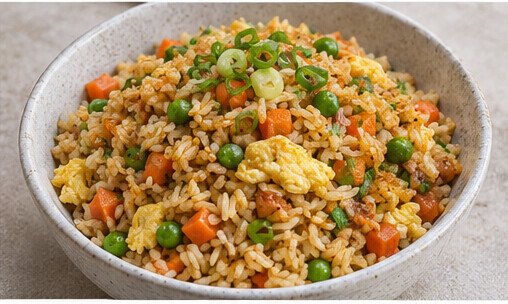
Fried rice is one of the most useful ways to turn cooked rice and vegetables into a quick meal. This Chinese-style home version focuses on separate grains, lightly set egg and aromatics that perfume the oil before the rice goes into the pan. Chilled rice makes the job easier because it is drier and less likely to clump. The recipe is flexible: keep the vegetables small, the seasoning restrained and the pan hot.
Why This Method Works
Good fried rice depends more on moisture control and timing than on a long ingredient list. Cold rice separates easily, while scallion whites and garlic add aroma quickly. Egg is cooked first so it stays tender rather than disappearing into the rice. Soy sauce is added around the edge of the hot pan, where it briefly sizzles and coats the grains without making them soggy.
This recipe is written for a standard home kitchen, with visual and texture cues alongside the timing. Pan size, ingredient temperature and stove strength all affect how quickly food cooks, so use the stated minutes as a guide rather than a substitute for checking the dish. Prep the ingredients before cooking and make small adjustments at the end; that approach is more reliable than trying to correct a sauce or texture after it has gone too far.
Ingredients
Makes: 4 servings | Active prep: 15 minutes | Cooking: 10 minutes. Gather and measure everything before you begin.
- 4 cups (about 600 g) cold cooked long-grain rice
- 2 tbsp neutral oil, divided
- 2 large eggs, lightly beaten
- 1 cup diced carrots and peas
- ½ cup finely diced onion
- 2 garlic cloves, minced
- 3 scallions, whites and greens separated
- 2 tbsp light soy sauce, or to taste
- 1 tsp toasted sesame oil
- ½ tsp white pepper or black pepper
- Optional: 1 cup diced cooked chicken or tofu
Ingredient notes
- Rice cooked the day before is convenient, but cool it promptly and refrigerate it in a shallow container. Do not leave cooked rice at room temperature for several hours.
- Long-grain rice tends to keep distinct grains. Jasmine rice works well; short-grain rice can be used but may be stickier.
- Frozen peas can go straight into the pan. If carrots are large or hard, dice them small so they cook quickly.
- Light soy sauce seasons the rice. Add gradually and taste before adding salt, because soy sauce brands vary.
Equipment and Prep
Use the largest skillet or wok you have so the rice spreads out rather than steams in a pile. A flexible spatula helps break up cold rice without crushing it. Have eggs, vegetables and sauce measured before heating the pan. If your burner is modest, make two smaller batches; the rice will brown better and the pan will recover heat between additions.
Before cooking, read through the method once and organize ingredients in the order you will use them. Keep raw meat and seafood separate from ready-to-eat toppings, and wash hands, boards and utensils after they touch raw ingredients. A thermometer is useful for checking poultry; remove it from the heat when the thickest piece reaches a safe temperature. For stovetop recipes, medium heat is a starting point, not a fixed setting: lower it if food darkens before it softens, and raise it only when the pan is dry and ready to sear.
Step-by-Step Method
1. Separate the chilled rice
Break apart the cold rice with clean fingers or a fork. Separate any compacted clumps before cooking; trying to break them in the pan can crush the grains. Mix soy sauce with white pepper in a small cup so it is ready.
2. Scramble the eggs
Heat half the oil in a wide skillet over medium-high heat. Add beaten eggs and gently scramble until just set but still soft. Transfer them to a plate; they will warm through again at the end.
3. Cook vegetables and aromatics
Add remaining oil, onion and carrot. Cook for 2–3 minutes, stirring, until onion is translucent and carrot begins to soften. Add peas, scallion whites and garlic and stir for another 30–45 seconds.
4. Fry the rice
Add rice in an even layer. Let it sit against the hot surface briefly, then toss and spread it again. Repeat for 2–3 minutes until the grains are hot and some begin to look lightly toasted.
5. Season around the pan
Drizzle the soy mixture around the edge of the pan rather than over one pile. Toss immediately to distribute the seasoning. If rice looks dry, add a teaspoon of water; if wet, keep cooking uncovered.
6. Return egg and finish
Fold in the scrambled egg and any cooked chicken or tofu. Cook just until everything is hot. Turn off the heat and stir through sesame oil and scallion greens. Taste before adding more soy sauce.
7. Serve hot
Serve hot as a quick main or side. Add sliced cucumber, a simple soup or stir-fried greens to make a fuller meal. Keep any leftovers moving quickly into refrigeration.
Texture and Troubleshooting
Use these adjustments to diagnose the most common changes that can happen in a home kitchen. First identify whether the issue is moisture, heat or seasoning. Changing one factor at a time makes it easier to recover the dish and learn what to do next time.
- Sticky rice usually means it was freshly cooked, too wet or packed into the pan. Chill it uncovered briefly in a shallow layer, then fry in batches.
- If rice tastes bland, add soy sauce in small amounts and check for enough scallion, garlic and pepper. Sesame oil is for aroma, not a substitute for salt.
- Rice that browns too quickly can signal a pan that is too hot or garlic added too early. Lower heat slightly and add garlic only after the vegetables soften.
- If the pan releases water, the vegetables may be wet or frozen peas were added in excess. Let moisture evaporate before adding soy sauce.
Easy Variations
The basic method is flexible, but substitutions can change cooking time and moisture. Keep the core balance of salty, bright, rich and fresh flavors in mind. Add watery vegetables early enough for excess liquid to evaporate, and add delicate herbs or dairy near the end.
- Use diced cooked chicken, shrimp, tofu or leftover roast vegetables. Add cooked proteins near the end so they warm without becoming tough.
- For a meat-free version, add mushrooms or edamame. Cook mushrooms first so their moisture evaporates and they brown.
- Replace part of the soy sauce with a small splash of vegetarian mushroom seasoning for deeper savory flavor.
Serving, Storage and Reheating
Serve fried rice as a weeknight main with sliced cucumber, leafy greens or a light soup. It also works as a side for grilled fish or stir-fried vegetables. Refrigerate leftovers promptly in a shallow airtight container and use within 1–2 days. Reheat until steaming hot in a skillet or microwave, stirring halfway through. Do not cool and reheat rice repeatedly; divide it into portions you expect to eat.
For food safety, refrigerate perishable leftovers within two hours, using shallow containers so they cool quickly. Reheat only the portion you plan to eat and bring it until steaming hot throughout. If the dish contains meat, use a food thermometer where practical rather than relying on color alone. These simple steps help preserve texture while keeping make-ahead meals easy to manage.
Recipe at a glance
Yield: 4 servings. Prep: 15 minutes. Cook: 10 minutes. Total time: 25 minutes. Start by preparing and measuring the ingredients, follow the cooking order above, then taste and finish with the suggested toppings just before serving.
Frequently Asked Questions
Can I make fried rice with freshly cooked rice?
Yes, but spread it on a tray and let steam escape before frying. A few hours in the refrigerator helps dry the surface and makes separate grains easier to achieve.
What kind of rice is best?
Long-grain rice, including jasmine, is a reliable choice because the grains separate well. Use rice that has been cooked with the right amount of water and fully chilled.
Can I freeze fried rice?
You can freeze it in meal-size portions, though the vegetables and egg may soften slightly. Cool quickly, seal well, thaw in the refrigerator and reheat until steaming.
How do I make this gluten-free?
Use a certified gluten-free tamari or soy sauce and check any other seasonings. Keep the amount modest and taste as you go.
This Chinese recipe is designed as a practical home-cooking guide. Adjust salt and heat to your ingredients and preferences, and use the texture cues in the method for the best result.