
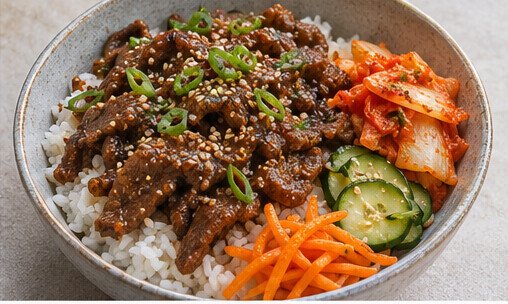
Bulgogi-style beef is thinly sliced, quickly cooked and seasoned with a sweet-savory marinade. In this home version, soy, garlic, ginger, sesame and grated pear coat the beef without requiring special equipment. A very hot skillet helps the slices brown instead of simmer. Serve the beef over rice with crunchy vegetables and kimchi for a balanced bowl that can be adjusted at the table.
Why This Method Works
Thin slices give the marinade more surface area and cook in minutes. Grated pear brings gentle sweetness and helps the marinade cling, while sesame oil is used for aroma rather than as the main cooking fat. Small batches keep the skillet hot. If beef is added all at once, it releases moisture and the surface steams, so the bowl loses the browned edges that make it satisfying.
This recipe is written for a standard home kitchen, with visual and texture cues alongside the timing. Pan size, ingredient temperature and stove strength all affect how quickly food cooks, so use the stated minutes as a guide rather than a substitute for checking the dish. Prep the ingredients before cooking and make small adjustments at the end; that approach is more reliable than trying to correct a sauce or texture after it has gone too far.
Ingredients
Makes: 4 servings | Active prep: 25 minutes | Cooking: 12 minutes. Gather and measure everything before you begin.
- 700 g thinly sliced ribeye, sirloin or flank steak
- 3 tbsp soy sauce
- 1 tbsp brown sugar or honey
- ½ Asian pear, grated, or ½ crisp apple
- 3 garlic cloves, minced
- 1 tsp grated fresh ginger
- 1 tbsp toasted sesame oil
- 1 tsp rice vinegar
- 2 scallions, thinly sliced
- 1 tsp neutral oil for the pan
- Cooked rice, cucumber, carrots, kimchi and sesame seeds to serve
Ingredient notes
- Thinly sliced beef is easiest to cut when partially frozen for 20–30 minutes. Slice across the grain so each bite stays tender.
- Asian pear is a common marinade ingredient, but a crisp apple works as a practical substitute. Avoid very sweet canned fruit.
- Soy sauce brands vary in saltiness. Use regular soy for a balanced marinade and adjust at the table rather than adding extra salt early.
- Kimchi is fermented and varies in heat and salt. Serve it separately so each person can choose how much to add.
Equipment and Prep
A sharp knife and a wide heavy skillet are more important than a wok for this recipe. A shallow dish or resealable food-safe bag helps coat the beef evenly. Keep a plate ready for cooked portions and do not reuse the raw marinade as a sauce unless it has been boiled thoroughly. Use separate tongs for raw and cooked meat.
Before cooking, read through the method once and organize ingredients in the order you will use them. Keep raw meat and seafood separate from ready-to-eat toppings, and wash hands, boards and utensils after they touch raw ingredients. A thermometer is useful for checking poultry; remove it from the heat when the thickest piece reaches a safe temperature. For stovetop recipes, medium heat is a starting point, not a fixed setting: lower it if food darkens before it softens, and raise it only when the pan is dry and ready to sear.
Step-by-Step Method
1. Mix the bulgogi marinade
Whisk soy sauce, brown sugar, grated pear, garlic, ginger, sesame oil and rice vinegar in a bowl. Add sliced beef and scallion whites, then toss to coat. Cover and refrigerate for 30 minutes to 4 hours. A longer marinate is not essential for thin slices.
2. Prepare rice and vegetables
While the beef rests, cook rice and prepare cucumber, carrots, kimchi and scallion greens. Keep vegetables crisp and separate; they add freshness beside the savory beef. If you want warm carrots, sauté them briefly before the beef.
3. Sear beef in batches
Heat a wide skillet over high heat until very hot, then add a small amount of neutral oil. Lift beef from the marinade and let excess drip off. Cook in a single layer, leaving space around slices, for 1–2 minutes per side.
4. Finish the beef
Transfer browned beef to a clean plate and repeat with the remaining slices. If the skillet begins to smoke heavily or the sugar darkens too quickly, lower the heat slightly and wipe out burnt bits before the next batch.
5. Taste and add scallions
Return all beef to the pan with a spoonful of marinade. Toss for 30–60 seconds until the slices are hot and glossy. Check that the beef is cooked to your preference; thin slices cook rapidly.
6. Build the bowls
Taste one slice and adjust with a little soy or vinegar if needed. Scatter scallion greens and sesame seeds over the beef. Let the meat rest for a minute while you portion rice into bowls.
7. Serve with kimchi
Add beef, cucumber, carrots and kimchi over rice. Serve extra kimchi and a mild gochujang-based sauce separately so the bowl can be tailored for heat.
Texture and Troubleshooting
Use these adjustments to diagnose the most common changes that can happen in a home kitchen. First identify whether the issue is moisture, heat or seasoning. Changing one factor at a time makes it easier to recover the dish and learn what to do next time.
- If beef steams and turns gray, cook smaller batches and make sure the skillet reheats between them. Drain excess marinade rather than pouring the whole bowl in.
- Burnt sugar can make the pan bitter. Lower the heat slightly, remove blackened residue and continue with a clean surface.
- Tough beef may have been sliced with the grain or cooked too long. Slice thinly across the grain and use brief high-heat cooking.
- If the bowl tastes too salty, add more rice and fresh cucumber or serve a lightly dressed salad alongside.
Easy Variations
The basic method is flexible, but substitutions can change cooking time and moisture. Keep the core balance of salty, bright, rich and fresh flavors in mind. Add watery vegetables early enough for excess liquid to evaporate, and add delicate herbs or dairy near the end.
- Use thinly sliced chicken or mushrooms with the same flavor profile, adjusting cooking time and checking chicken reaches a safe internal temperature.
- For a less sweet marinade, reduce the sugar and add an extra splash of rice vinegar.
- Serve the beef in lettuce cups with rice on the side for a lighter, hands-on meal.
Serving, Storage and Reheating
Build bowls with rice, hot beef and cool vegetables, keeping kimchi and spicy sauce on the side. A simple soup or steamed greens make easy accompaniments. Refrigerate leftovers promptly and use within 3 days. Reheat the beef in a skillet with a spoonful of water until hot, then assemble fresh bowls. Store raw beef in marinade only while refrigerated; discard unused marinade that has contacted raw meat or boil it thoroughly before serving.
For food safety, refrigerate perishable leftovers within two hours, using shallow containers so they cool quickly. Reheat only the portion you plan to eat and bring it until steaming hot throughout. If the dish contains meat, use a food thermometer where practical rather than relying on color alone. These simple steps help preserve texture while keeping make-ahead meals easy to manage.
Recipe at a glance
Yield: 4 servings. Prep: 25 minutes. Cook: 12 minutes. Total time: 37 minutes, plus marinating. Start by preparing and measuring the ingredients, follow the cooking order above, then taste and finish with the suggested toppings just before serving.
Frequently Asked Questions
Can I marinate bulgogi overnight?
A few hours is plenty for thin beef. Overnight can work, but the pear and salt may soften the surface more than desired. Keep the meat refrigerated and cook it the next day.
What cut of beef is best?
Ribeye is tender and flavorful, while sirloin or flank are leaner. Whatever the cut, slice very thinly across the grain.
Is bulgogi spicy?
The marinade in this recipe is savory-sweet rather than hot. Serve chili paste separately so the heat stays optional.
Can I make bulgogi without pear?
Yes. Use grated apple or omit fruit and add a little extra brown sugar. The pear gives gentle sweetness but is not required for a quick home version.
This Korean recipe is designed as a practical home-cooking guide. Adjust salt and heat to your ingredients and preferences, and use the texture cues in the method for the best result.