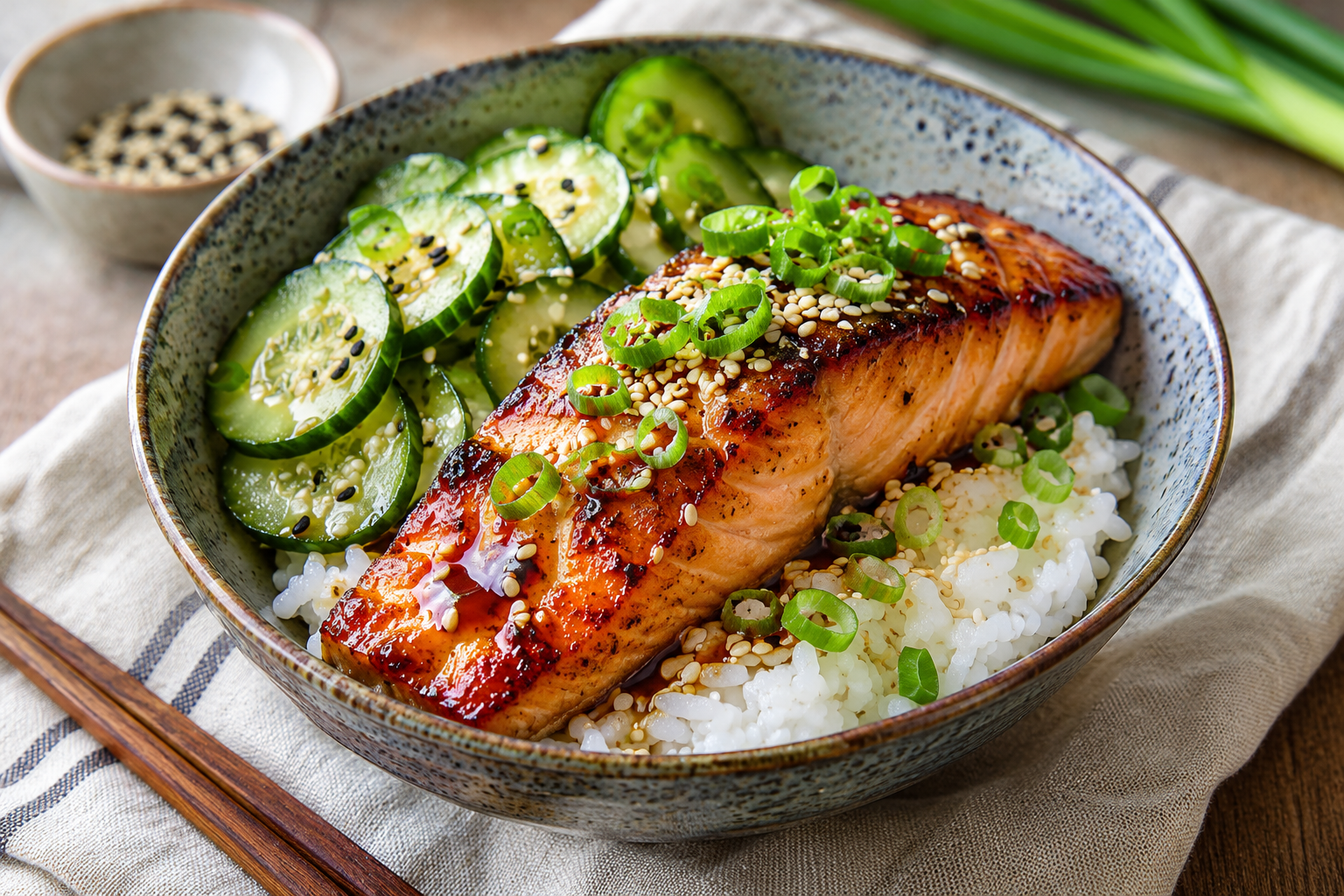
This Japanese-inspired miso-glazed salmon rice bowl pairs tender, savory-sweet fish with warm rice and crisp vegetables. A short miso marinade brings deep umami without hiding the salmon, while a quick broil or hot skillet creates a lacquered finish. The bowl is flexible: add cucumber, edamame, or greens depending on what is in season.
On this page
- Ingredients
- Recipe card
- Understanding the miso glaze
- Cooking the salmon
- Building balanced bowls
- Storage and food safety
- Frequently asked questions
Ingredients for Miso Salmon Bowls
Choose center-cut salmon fillets of similar thickness so they finish at about the same time. Skin-on pieces are easy to handle and can be crisped in a pan; skinless fillets are convenient for broiling. White miso, also called shiro miso, is mild and slightly sweet. Red miso has a stronger, saltier flavor, so use less and taste the glaze before coating the fish. Mirin adds gentle sweetness and shine. Rice vinegar balances the glaze, and a little honey helps it brown.
For the bowls, use short- or medium-grain rice for a tender, cohesive base. Brown rice or quinoa can also work, though both have a firmer bite. Cucumber, sliced scallions, steamed edamame, shredded carrot, and avocado offer contrasting textures. Toasted sesame seeds and nori strips add aroma. Keep the toppings simple enough that the salmon remains the focus.
Miso-Glazed Salmon Rice Bowls
Prep: 20 minutes Cook: 20 minutes Serves: 4
Ingredients
- 4 salmon fillets, about 5 ounces each
- 3 tablespoons white miso
- 1 tablespoon mirin
- 1 tablespoon rice vinegar
- 1 tablespoon honey
- 1 teaspoon toasted sesame oil
- 2 cups uncooked short-grain rice, rinsed
- 1 cucumber, thinly sliced
- 1 cup shelled edamame, cooked
- 2 scallions, thinly sliced
- 1 tablespoon toasted sesame seeds
- Nori strips, optional
Instructions
- Rinse rice until the water is mostly clear. Cook according to package directions and keep covered while the salmon cooks.
- Whisk miso, mirin, rice vinegar, honey, and sesame oil until smooth. Pat salmon dry and brush the glaze over the top and sides. Marinate in the refrigerator for 15 to 30 minutes.
- Heat the oven broiler with a rack about 6 inches from the element, or heat a nonstick skillet over medium. Line a sheet pan with foil if broiling.
- Broil salmon for 6 to 10 minutes, depending on thickness, until it flakes easily and reaches 145°F in the thickest part. Watch closely because the honey in the glaze can darken quickly. For a skillet, cook skin-side down for 5 to 7 minutes, turn carefully, brush with any reserved clean glaze, and cook 2 to 4 minutes more.
- Divide rice among bowls. Add cucumber and edamame, top with salmon, and finish with scallions, sesame seeds, and nori.
How the Miso Glaze Works
Miso is fermented soybean paste with a concentrated savory flavor. It seasons the fish and gives the surface a golden, glossy finish. White miso is usually the easiest style to use in a quick glaze because it is less intense than red miso. Miso can vary by brand, so taste the mixture before using it. It should be savory first, with enough sweetness and acidity to make it balanced.
Mirin is a sweet rice seasoning. If you do not keep it at home, mix a teaspoon of sugar into dry sake or use a little extra rice vinegar with a small amount of honey. The result will not be identical, but it will provide sweetness and acidity. Avoid adding too much salt because miso already supplies plenty. Soy sauce is not necessary; if you add it, start with only a few drops.
Keep some glaze separate before it touches raw fish if you want extra sauce for serving. Never brush raw-fish marinade onto cooked salmon unless it has first been brought to a full boil. A clean reserved portion is the simplest option. The thin layer of glaze is enough to season each fillet, so excess coating can be wiped away before broiling to reduce scorching.
Cooking the Salmon Evenly
Salmon thickness matters more than the exact clock time. A thin tail piece may cook several minutes sooner than a thick center-cut portion. If fillets are uneven, fold the thin end under itself or remove it early. Patting the surface dry helps the glaze stick and encourages browning. Let the fish sit briefly at room temperature while the oven heats, but keep total time outside refrigeration modest.
Broiling is convenient when making several portions at once. Place the fish on a foil-lined pan and leave space between pieces so heat can circulate. Start checking early; miso and honey brown quickly, and broilers vary in intensity. If the top colors before the center is ready, lower the rack or switch the oven to a moderate bake to finish gently. In a skillet, use medium heat rather than high so the glaze does not burn before the fish cooks through.
For a reliable doneness check, use an instant-read thermometer inserted into the thickest part of the fillet. The FDA recommends cooking fish to 145°F. The flesh should be opaque and separate into flakes. Let the salmon rest for a couple of minutes while you arrange the toppings. Carryover heat continues cooking the center slightly, so avoid leaving thin fillets under the broiler after they are done.
Build a Balanced Rice Bowl
A satisfying bowl has a soft base, rich protein, fresh crunch, and a bright finishing note. Start with a modest layer of rice, then add one or two vegetables in separate sections. Cucumber and carrot bring crispness; edamame contributes a soft, bean-like bite. Pickled ginger or a squeeze of lime can cut through the rich salmon. A small drizzle of spicy mayo is optional, but use it lightly so it does not overwhelm the miso.
For meal prep, pack rice, vegetables, and salmon in separate compartments when possible. Keep delicate cucumber and avocado away from hot rice until serving. Add sesame seeds and nori at the end because steam can soften them. If you are cooking for different preferences, set out toppings separately so everyone can assemble a bowl to taste.
This is a flexible template rather than a strict combination. Swap edamame for steamed broccoli, use shredded cabbage instead of cucumber, or add sautéed mushrooms for more savory depth. Brown rice makes the bowl heartier; jasmine rice is fragrant but less traditional for this Japanese-inspired pairing. Keep the sauce and garnishes simple and let the salmon remain the center of the meal.
Storage and Food Safety
Refrigerate cooked salmon and rice within two hours in shallow, covered containers. Store leftovers for up to three to four days in a refrigerator set to 40°F or below. Reheat salmon gently until steaming, or enjoy it cold in a salad if it was handled and chilled safely. Rice should also be cooled promptly rather than left warm on the counter. For official guidance, consult the FoodSafety.gov cold storage charts.
For a fresh meal, prepare the glaze and toppings ahead but cook the salmon close to serving time. You can rinse rice earlier in the day and refrigerate it covered, then cook it when needed. Do not keep raw fish in the marinade for many hours; a short 15- to 30-minute rest is enough for a thin glaze. Discard any marinade that has contacted raw salmon unless you boil it thoroughly.
Serve this with miso soup, quick pickled vegetables, or a simple green salad. Browse more ideas in our Japanese recipes collection or explore other weeknight meals.
Frequently Asked Questions
Can I use red miso?
Yes. Red miso is more concentrated and salty, so begin with about two tablespoons and add a little honey to taste.
Can I make this without mirin?
Use a small amount of dry sake or rice vinegar and balance it with honey or sugar. The flavor will differ slightly but still work.
Can I air-fry the salmon?
Yes. Air fry at about 400°F, checking early because appliances vary. Use a liner approved for your model and avoid blocking airflow.
What rice should I choose?
Short- or medium-grain rice gives the most cohesive bowl. Brown rice, quinoa, or another cooked grain can be substituted.
How do I keep the glaze from burning?
Use a moderate rack position and watch the fish closely. Wipe away thick excess glaze and finish cooking at a lower oven temperature if needed.