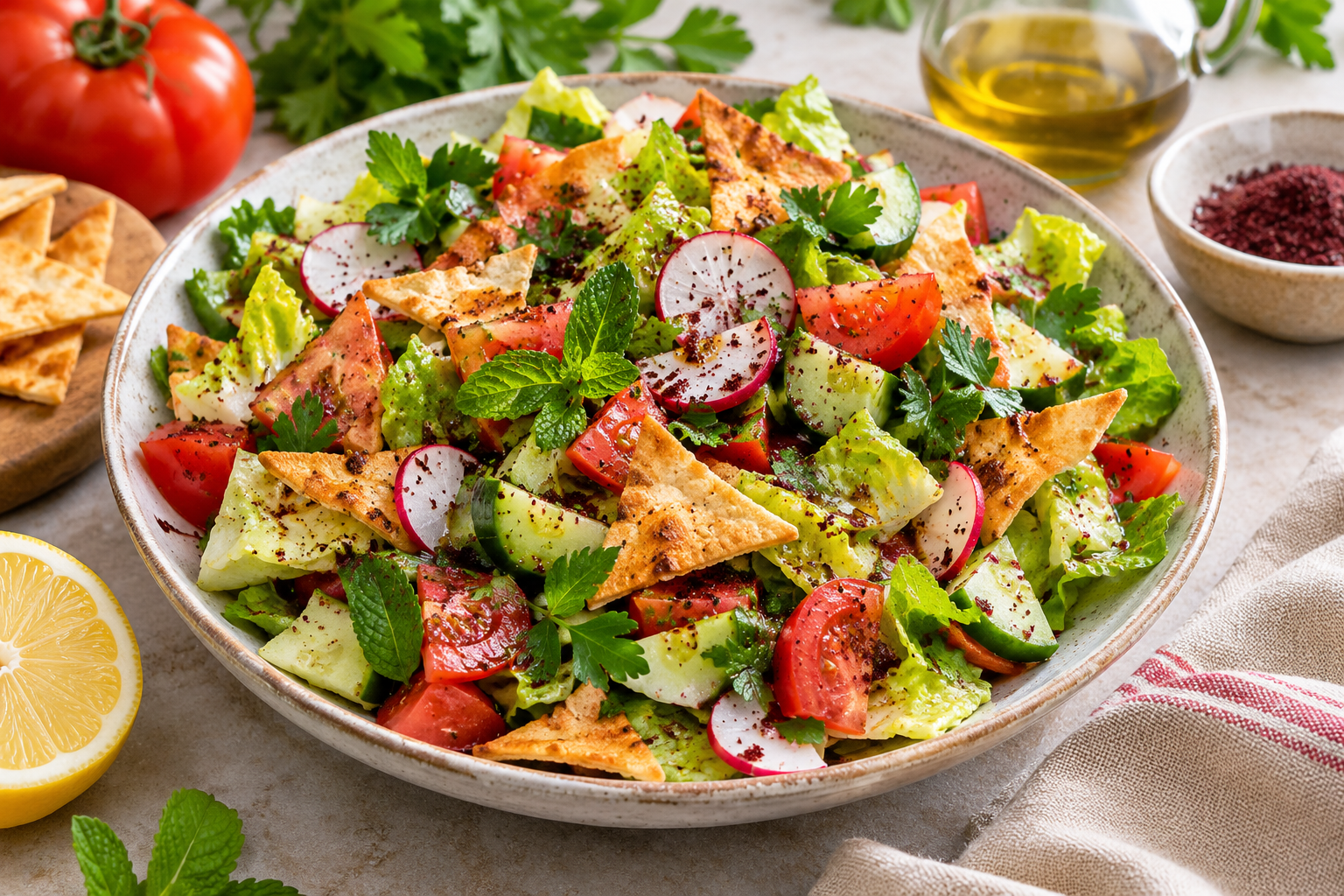
Lebanese fattoush is a bright, crunchy bread salad built from ripe vegetables, herbs, toasted pita and a lemony dressing sharpened with sumac. This home-style version keeps the vegetables crisp, seasons the pita separately, and dresses everything just before serving so every bite stays fresh. It is a flexible side dish for grilled meats, mezze or a light lunch.
Why this fattoush works
Fattoush belongs to the family of Levantine salads that make good use of day-old bread. The pita is toasted until crisp, then added at the last moment, giving the salad its signature contrast of juicy vegetables and crunchy pieces. The dressing balances lemon, olive oil, garlic and sumac, a tart red spice with a clean citrus-like flavor. A small amount of pomegranate molasses is optional, but it adds a rounded sweet-tart note that plays well with tomatoes and cucumber.
This recipe is designed around texture. Lettuce, cucumber and radishes are dried thoroughly after washing; tomatoes are cut just before mixing; and the pita is kept separate until the bowl is ready to go to the table. The result tastes vivid without becoming watery. Because produce varies in sweetness and acidity, the dressing is mixed separately and adjusted before it touches the vegetables.
Ingredients and substitutions
Serves: 4 as a side or 2 as a light lunch
Prep: 25 minutes
Cook: 8 minutes
Total: about 35 minutes
For the pita
- 2 medium pita breads, preferably a day old
- 1 tablespoon extra-virgin olive oil
- ¼ teaspoon fine salt
- ½ teaspoon dried oregano or za’atar, optional
For the salad
- 1 small romaine heart, washed, dried and torn
- 2 medium ripe tomatoes, cut into bite-size wedges
- 1 Persian cucumber or ½ English cucumber, diced
- 4 radishes, thinly sliced
- 2 scallions, thinly sliced
- ½ cup roughly chopped flat-leaf parsley
- ¼ cup chopped fresh mint
- 2 tablespoons fresh purslane, if available
For the dressing
- 3 tablespoons fresh lemon juice
- 3 tablespoons extra-virgin olive oil
- 1 small garlic clove, finely grated
- 1½ teaspoons ground sumac, plus more to finish
- 1 teaspoon pomegranate molasses, optional
- ¼ teaspoon fine salt, plus more to taste
- Freshly ground black pepper
Ingredient notes: Sumac should taste tangy and fragrant, not dusty or bitter. If yours is very sharp, begin with one teaspoon and add more after tasting. Romaine holds its shape well, but a mixture of tender lettuce and crisp leaves is also good. Purslane contributes a lightly lemony bite and is traditional in some versions; watercress or a few extra parsley leaves can stand in. Use a good olive oil because the dressing is uncooked.
How to make fattoush
1. Toast the pita
Heat the oven to 400°F (200°C). Split the pita pockets open and tear or cut them into rough 1-inch pieces. Toss with olive oil, salt and optional oregano or za’atar. Spread in one layer on a baking sheet and bake for 7–9 minutes, turning once, until dry and golden at the edges. They crisp further as they cool. For a stovetop method, toast the pieces in a wide skillet over medium heat, stirring often, until crisp; use a little less oil so they do not become greasy.
2. Mix and taste the dressing
Whisk lemon juice, olive oil, garlic, sumac, pomegranate molasses if using, salt and a few grinds of black pepper in a small bowl. Let it stand for five minutes so the garlic mellows and the sumac hydrates. Taste with a lettuce leaf. It should be lively and slightly more seasoned than you think necessary, because the vegetables will dilute it. Add lemon for brightness, olive oil to soften the acidity, or a pinch of salt if the flavor seems flat.
3. Prepare the vegetables
Dry the lettuce very well; moisture clinging to the leaves weakens the dressing. Cut the tomatoes over a board so you can collect their juices, then transfer both tomatoes and juice to a large bowl. Add cucumber, radishes and scallions. Sprinkle in parsley, mint and purslane. Pour over about two-thirds of the dressing and toss gently. Add more dressing a little at a time until the vegetables look lightly coated rather than swimming in liquid.
4. Add pita and serve immediately
Fold in most of the toasted pita just before serving, saving a few pieces for the top. Taste and adjust with more sumac, lemon or salt. Scatter the remaining pita over the salad and finish with a small drizzle of olive oil. Do not leave the finished bowl standing for long: the pita is meant to soften slightly where it meets the dressing while staying crisp on top.
Tips for crisp, balanced salad
- Dry every leaf. A salad spinner followed by a clean towel gives the best result; excess water makes the dressing slide off.
- Toast the pita until fully dry. Pale, soft pieces turn chewy quickly once dressed. Look for golden edges and a crisp center.
- Dress in stages. Tomatoes release juice, so start with part of the dressing and add the rest only if needed.
- Keep the herbs fresh. Tear tender mint leaves by hand or slice them at the last minute to preserve their aroma.
- Use sumac as a finishing spice. A final pinch makes the citrus flavor more noticeable without adding extra liquid.
- Scale for a crowd. Double the vegetables and dressing, but toast pita in batches so the pieces brown instead of steam.
Serving ideas and variations
Serve fattoush with grilled chicken, lamb kebabs, falafel, hummus or a platter of olives and labneh. It also makes a satisfying lunch with chickpeas folded in. For a more substantial salad, add ¾ cup drained chickpeas and a little extra dressing. Some cooks add green bell pepper; others use purslane as the main leafy green. Both fit the spirit of the dish. If you prefer a sweeter dressing, add a little more pomegranate molasses, but keep the lemon prominent so the salad remains refreshing.
For a gluten-free variation, omit the pita and add crisp roasted chickpeas or toasted gluten-free flatbread. For a dairy-free table, the base recipe already works without cheese. A small crumble of feta is a modern option, but it is not necessary: the sumac, herbs and vegetables provide plenty of character.
Storage and make-ahead notes
Fattoush is best assembled just before eating. You can wash and dry the greens, chop the herbs, slice the radishes and toast the pita up to one day ahead. Keep each component in a separate airtight container in the refrigerator; store pita at room temperature once completely cool. Mix the dressing and refrigerate it separately, then let it return to room temperature and whisk before using. Do not dress or add pita to the salad until serving.
If the salad has already been dressed, refrigerate leftovers promptly and eat them within a day, understanding that the pita will soften. Refresh with a squeeze of lemon and a handful of fresh herbs rather than trying to re-crisp the bread.
Frequently asked questions
What is sumac, and can I leave it out?
Sumac is a tangy spice made from dried berries. It gives fattoush its characteristic tart flavor. If you cannot find it, use extra lemon juice and a little finely grated lemon zest, although the taste will not be exactly the same.
Can I fry the pita instead of baking it?
Yes. Fry pieces in a shallow layer of oil over medium heat until crisp and golden, then drain well and season while warm. Baking uses less oil and is easier for a large batch.
How do I stop fattoush from getting soggy?
Dry the vegetables thoroughly, add dressing gradually, and fold in the pita right before serving. Keep extra dressing and pita on the side if the salad will sit out.
Can I make the dressing ahead?
Yes. Whisk it up to two days ahead and refrigerate in a sealed jar. Olive oil may firm when cold; let the jar stand at room temperature and shake well before using.
Is fattoush usually spicy?
No. The classic flavor is tart, herbal and savory rather than hot. Add a pinch of Aleppo pepper or chili flakes if you want gentle heat.
Recipe tested with standard supermarket produce; adjust the lemon and salt to suit the acidity of your tomatoes and sumac.