
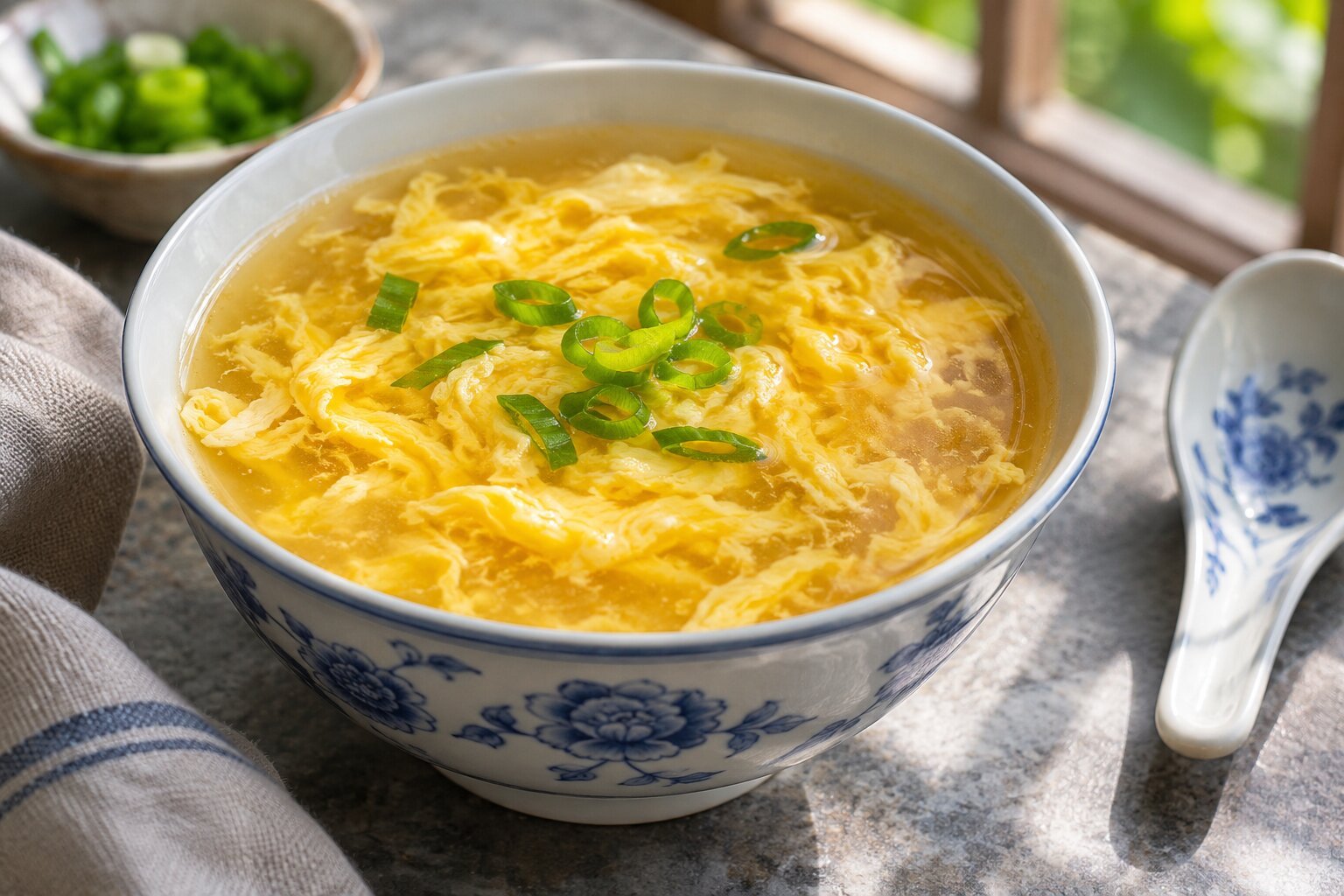
The broth should move gently when the eggs go in. Pour slowly and stir just enough to create ribbons without breaking them into tiny flecks.
Prep 10 minutes · Cook 10 minutes · Serves 4
Ingredients
- 4 cups low-sodium chicken or vegetable stock
- 1 teaspoon grated fresh ginger
- 1 tablespoon cornstarch
- 2 tablespoons cold water
- 3 large eggs, beaten
- ½ teaspoon toasted sesame oil
- 2 scallions, sliced
- Fine salt and white pepper to taste
Method
- Bring stock and ginger to a simmer. Mix cornstarch and cold water, then stir the slurry into the pot.
- Simmer for 1 minute until the broth lightly thickens. Reduce the heat so bubbles rise gently.
- Stir the broth in one direction. Drizzle in the eggs in a thin stream, then let the ribbons set and cook through.
- Season with sesame oil, salt and white pepper. Finish with scallions.
Cooking tips
Add the slurry gradually for a broth that still pours easily. Beat the eggs just until the whites and yolks are blended.
What gives egg drop soup its texture
Egg drop soup is a broth with soft ribbons of egg suspended in it. Two things determine whether those ribbons stay long enough to see in the bowl. The first is how quickly the egg enters the broth. The second is how vigorously the broth moves once the egg is in it. A thin, steady stream and a gentle circular motion give the egg time to set. If you whisk the soup after pouring, the ribbons break into small flecks. The soup still tastes good, but the next batch will look different if you slow down both motions.
Choose a broth you like on its own
Taste the stock before you start cooking. The finished soup will still have the character of that stock, even after you add egg, fresh ginger and sesame oil. A light chicken stock makes a familiar base. Vegetable stock works too, especially one with a clean flavor that leaves room for the ginger and scallions. If your broth is already salted, leave final seasoning until the end. If it tastes more concentrated than you want, dilute it with a little water before measuring. That is easier than trying to rebalance a pot after the eggs have gone in.
Set up the ingredients before heating
This soup comes together quickly once the stock reaches a simmer. Grate the ginger, slice the scallions and measure the sesame oil before you turn on the stove. Beat the eggs in a small pitcher or a bowl with a pouring lip if you have one. A cup with a handle also works. Use a fork to break up the whites until the mixture pours in a continuous stream. If a strand of white clings to the fork when you lift it, beat a few seconds longer. Set the cornstarch and water beside the stove so you can stir them together just before using them.
Thicken the broth lightly
Mix the cornstarch with cold water until the mixture looks milky and you can no longer see lumps. Cornstarch settles quickly, so stir it again immediately before pouring. While the stock simmers, add the slurry slowly and stir it through the pot. Let it cook for about a minute. The broth should look slightly glossy and still run freely from a spoon. A thicker soup can hide the shape of the ribbons and feel heavy in a small bowl. If the broth looks thicker than you like at this stage, stir in a splash of stock before adding the egg.
Pour the egg in a steady stream
Bring the soup down from a vigorous boil to a gentle simmer. Draw a spoon around the inside of the pot once or twice to get the broth moving, then pour the beaten eggs in slowly. You can pour around the outer part of the pot to spread the egg over more of the surface. Pause if the stream starts to come out too fast. If your bowl is hard to pour from, drizzle the egg from a spoon held close to the broth. Wait briefly for the ribbons to set, then lift through them gently with the spoon and let the egg cook through before taking the pot off the heat.
Adjust the flavor after the ribbons set
Sesame oil has a strong aroma, so add the measured amount near the end. Then taste a spoonful of broth on its own. If it is flat, start with a small pinch of salt. If it already tastes well seasoned, add only the scallions and a little white pepper. Black pepper works if that is what you have, though the darker specks will be visible. For a brighter bowl, use the green parts of the scallions as a final topping. If you want a less sharp onion flavor, stir some of the sliced white parts into the stock with the ginger.
Troubleshoot the next batch
If the soup turns cloudy and the egg breaks into tiny pieces, check the heat and stirring first. A rolling boil agitates the egg as it sets. Let the broth settle and use a smaller stream next time. If the ribbons gather in one thick mass, move the pouring hand around the pot as you add the egg. If the broth itself looks lumpy before you add the egg, the slurry may have sat too long or gone into the pot all at once. Whisk the broth at that stage and let it come back to a simmer before continuing.
Build a meal around the soup
Serve small bowls as a first course, or add them to a meal with steamed rice and a stir-fried vegetable. The light broth works particularly well alongside something with more texture, such as crisp scallion pancakes or garlicky baby bok choy. When serving several people, use a ladle that can pick up broth and ribbons together. Dip below the surface and lift gently, then divide the scallions across the bowls. If some guests prefer a stronger finish, put white pepper and sliced scallions on the table so each person can season their own bowl.
Frequently asked questions
Can I make egg drop soup without cornstarch?
Yes. Leave out the slurry and gently drizzle the egg into the simmering stock. The soup will be lighter and the ribbons may settle faster, so lift some egg with each ladleful when serving.
Why did my egg ribbons turn into little flakes?
The broth may have been boiling too hard or moving too quickly after you poured. Lower the heat, draw the spoon around the pot once or twice, then drizzle in the egg and wait briefly before touching the ribbons.
Can I make the stock base ahead?
You can prepare the broth and ginger in advance and finish the soup shortly before serving. Bring the base back to a simmer, stir together a fresh slurry, then add the egg. This keeps the ribbons tender and lets you adjust the thickness while you cook.
What if my soup is too thick?
Add warm stock a little at a time until the broth runs freely from a spoon. Taste again after thinning because the extra stock may change the level of salt and ginger you notice. Stir gently if you have already added the ribbons.
How do I avoid a strong sesame flavor?
Choose toasted sesame oil and measure it carefully, since small amounts are enough. If you are serving people with different preferences, leave it out of the pot and add a few drops to individual bowls just before serving.