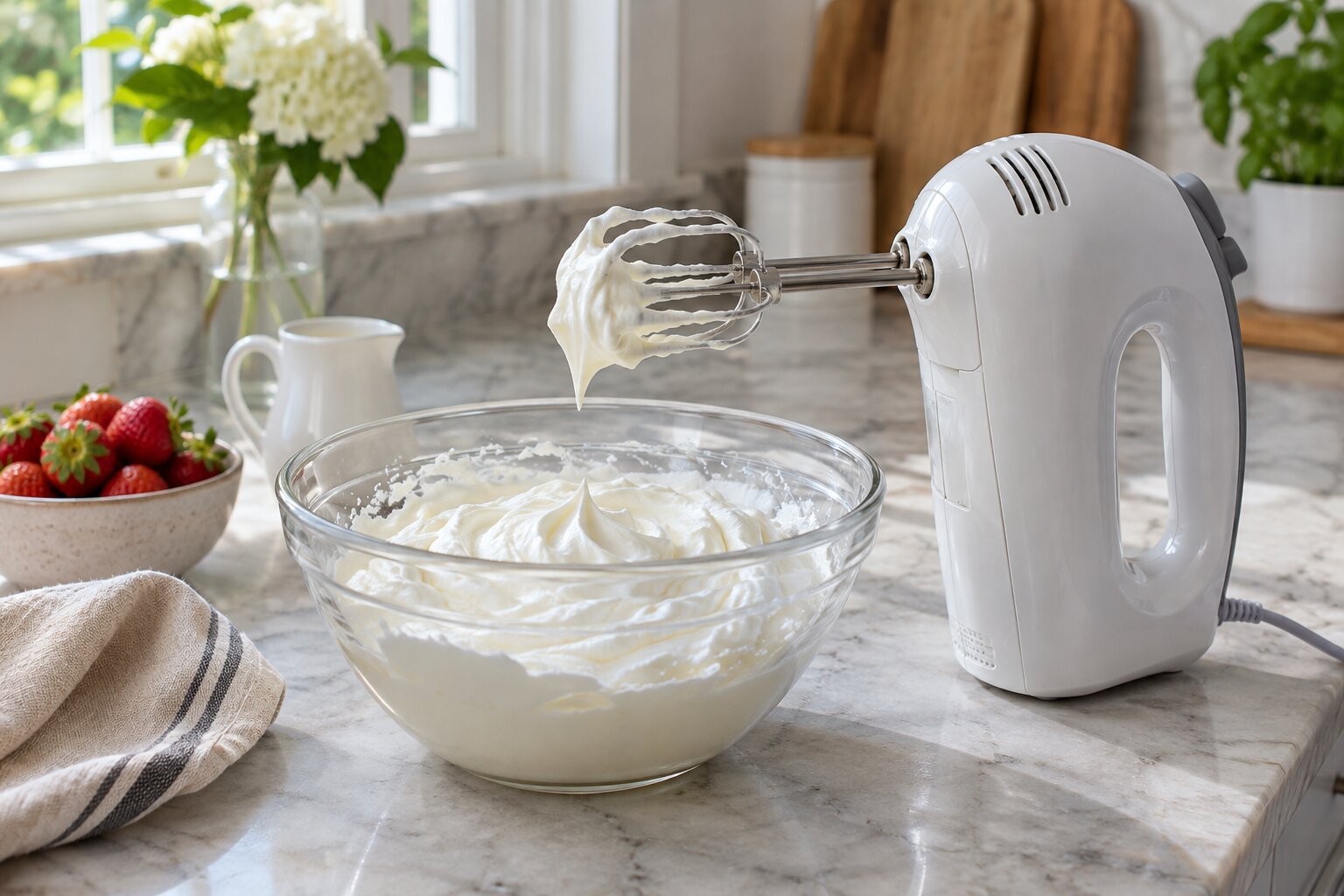
A hand mixer is useful for whipped cream, cake batter and creaming butter. Try the weight and controls if you can, because the easiest mixer to use is one you can hold steadily over a bowl.
Look for a gentle low speed
A slow setting helps incorporate flour with less dust and starts liquids with less splatter. Several speeds give you more control as the mixture thickens.
Compare beaters and grip
Check whether the beaters can be attached and released without awkward hand positions. A comfortable handle matters more during longer jobs like whipping egg whites.
Check the manual and storage
See how the manufacturer rates the mixer for thicker mixtures and which attachments can go in the dishwasher. A compact case or cord wrap can keep the beaters together.
Check capacity, fit and controls
Choose a model with a genuinely gentle low speed for incorporating flour or wet ingredients. Higher settings can wait until the mixture is contained. Start from the quantity you actually make on a weekday, then compare it with your largest regular batch. Read the maker’s minimum and maximum amounts for the task. A capacity printed on the box may describe the container, which is different from how much it can mix, heat or process in a single run.
Check weight in one hand, access to the on/off control and how the cable sits when you work over a bowl. Measure the space where the machine will be used with its accessories attached. Include clearance to lift lids, swing a head or pull out a basket if the design uses one. Keep the cable away from hot surfaces, spills and sharp edges. Select a position where controls can be seen and reached without crossing your hand over the machine.
Start with a simple trial
Start beaters in the bowl and follow the maker’s instructions for attaching or releasing them. Stop the mixer before lifting them from batter. Read the relevant operating instructions before the first batch. Have all ingredients measured so you can stop the machine when you need to check texture or doneness. Use a recipe you already understand if possible. A familiar starting point makes it easier to distinguish a normal sound, setting or interval from one you need to adjust.
Mix a batch appropriate to the beaters. A very stiff dough can overload equipment sold mainly for batter and whipping. Leave enough room for the mixture or food to move as intended. If a heavy batch moves only in one place, stop and check the amount and how ingredients were added. Switch the machine off before moving parts or clearing material near a moving attachment. Follow the maker’s procedure for scraping and restarting.
Choose between two common uses
A hand mixer is useful for creaming softened butter and sugar in lemon ricotta cake. Use a spatula after flour goes in if the recipe asks for a light mix. A recipe example is Italian Lemon Ricotta Cake. Do a small trial first and check how easy it is to reproduce your result with the equipment you already have. The first test is most revealing when it uses a quantity you normally serve.
American pancake batter is often easier to finish by hand. A whisk can combine the wet ingredients quickly, while the final mix benefits from fewer strokes. See Fluffy American Blueberry Pancakes for another useful example. Compare which stage benefits most from your choice of equipment. Keep an eye on both convenience and the finished texture, especially if the tool makes preparation easier while adding a step later.
Compare results with the smallest practical adjustment
Watch whether the beaters reach near the bottom in your most-used bowl. Scrape the stopped bowl by hand before restarting if dry pockets remain. Note what happened near the end of the trial. Check one portion from the middle and one from the edge when their conditions differ. Test a second batch with just one change, such as a smaller portion size, a different starting setting or a shorter check interval. Keep ingredient weights the same if they already match the recipe.
Read the duty cycle and use attachment speeds specified in the manual. Give the motor time to cool if the guidance requires it. Consider what happens when the machine is hot or when more than one batch is needed. It may take different time to return to the same steady condition. Observe the manufacturer’s duty cycle, cooldown and safety instructions. Avoid leaving a new setup unattended until you know how it behaves on the exact setting you use.
Clean, dry and store the right parts
Check whether the beaters can be washed in the dishwasher and wipe the unplugged housing separately as directed. Check which parts detach and which can touch water. Disconnect the machine from power where the instructions require it before removing attachments or cleaning. Let hot parts cool. Dry small crevices and leave enough space for removable pieces to air without resting the whole machine close to a sink or hot stove.
A hard storage case can help keep matching beaters together. Check its dimensions before choosing it over a plain cord wrap. Think about how often you will use each attachment when comparing kits. A second bowl or spare tray might solve a specific workflow issue when you regularly cook back-to-back. A long list of accessories is less useful if you have to move unrelated items every time you reach for the machine. Measure the storage you can dedicate to it.
What to check before buying or replacing one
Hold the mixer for a moment with the beaters attached if possible. A light body and low starting speed matter more for occasional use than a large accessory kit.
Set the bowl on a stable surface with enough room for your free hand. If the bowl moves on its own, steady it before turning the mixer back on. A narrower bowl can keep a small amount of cream deep enough for the beaters.
Decide which parts you need to handle before, during and after a normal recipe. Leave enough counter space to set a removable vessel down securely before pouring or checking it. Read the operating limits for one use rather than assuming two machines with similar accessories can handle the same task. Think through what will happen if you need to stop before the end and start again.
Use your normal workflow when judging electric hand mixer. Prepare the space first, carry out the most frequent use, then clean and store the item before calling the trial finished. Keep track of any step that becomes easier or any new limitation. Compare at least one other ordinary use before making the decision, since a tool that solves a single fiddly job may be too specialized for the space you have.
Frequently asked questions
Can a hand mixer knead bread?
Check the model’s manual and rated attachment. Some models are not intended for stiff dough and it can be easier to knead by hand.
Why did flour fly out of the bowl?
Start with beaters low in the bowl at low speed. Add flour in small amounts or stir it in by hand first.
What speed is best for creaming butter?
Choose the recommended speed for the model and the recipe. Adjust only after the sugar and softened butter have come together.
Do I need special attachments?
Buy the attachments you will use. Standard beaters cover many batters and a whisk attachment may help if you whip cream frequently.