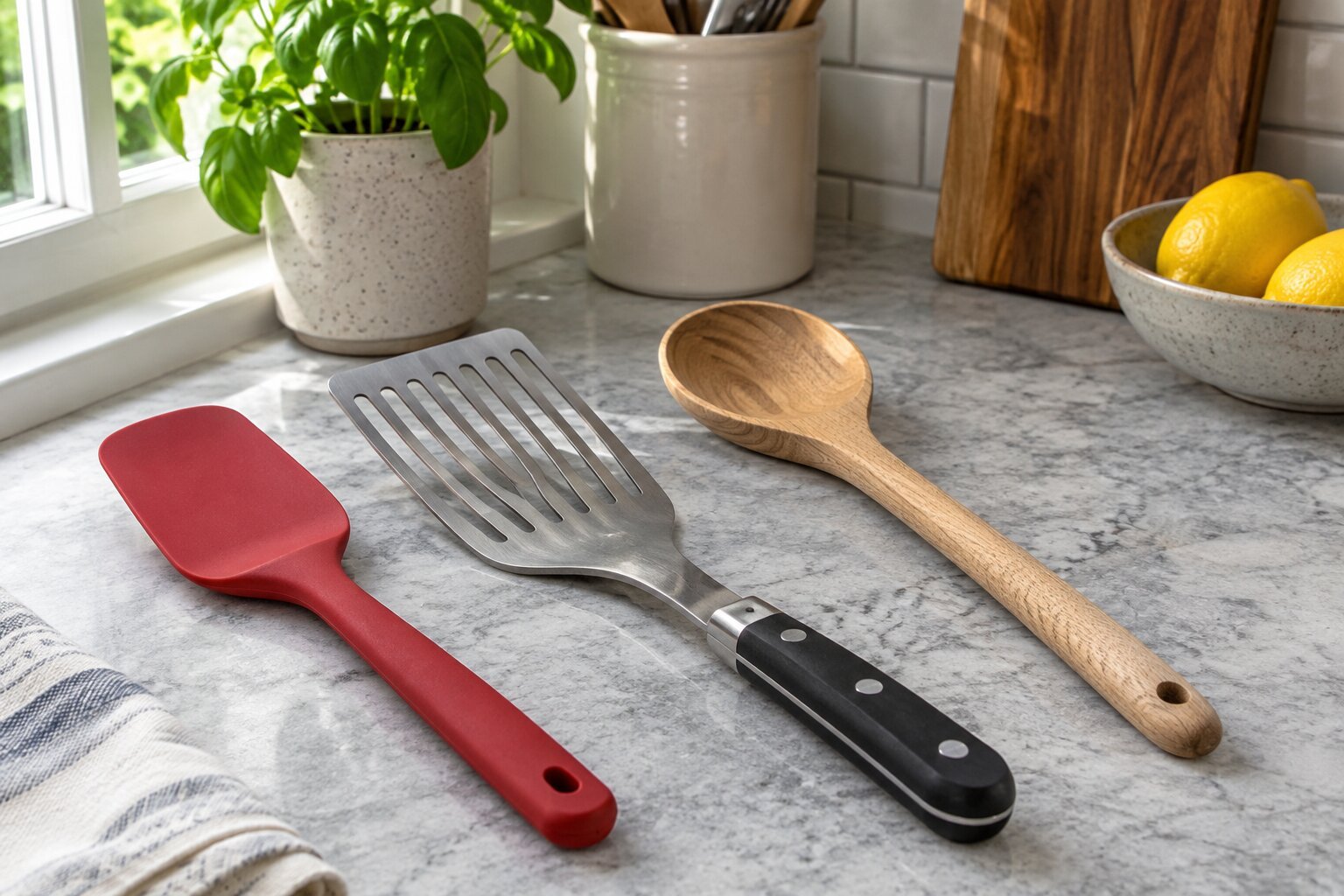
A spatula should match both the job and the surface it touches. A flexible edge is useful in a bowl, while a thin turner slides under food in a pan.
Silicone scraper for bowls
Use a flexible scraper to fold batter and reach the corners of a bowl. For stovetop work, check the manufacturer’s heat rating.
Slotted turner for flipping
A thin slotted turner slides under pancakes, fish and fried eggs. Choose a material compatible with your pan, particularly for coated surfaces.
Wooden spatula for stirring
A flat wooden edge can stir sauces and loosen browned bits after adding liquid. Wash and dry it as directed, and replace tools that develop cracks that are hard to clean.
Choose a shape for the job
A silicone scraper follows the bowl, while a turner needs a thin edge that can slide under a pancake or cutlet. Set a bowl or pan on the counter as you would for a recipe and look at where the tool has to reach. Some tasks need an edge that can get under food, while others need a surface that follows the wall of a bowl. Match the working part to the place where you will use it most often.
Shape the scraper to the bowl you normally use. A narrow tip is useful for jars, while a wide head moves more batter. Look at clearance between your grip and the rim of the vessel. You should be able to change angle without striking the side or bending your wrist sharply. Pick a comfortable size for the volume you normally handle. A wider tool covers more surface, while a smaller one gives more control in a small corner or around individual pieces.
Make a quick test in an ordinary recipe
For folding, cut down through the center and lift from underneath. Turn the bowl instead of repeatedly pressing the same portion against its wall. Start with a familiar recipe in your usual bowl or pan so you can tell the effect of the tool from the effect of the ingredients. Watch the center and the edges separately on the first pass. If it misses a strip of food or catches an edge, change the angle or reposition the vessel before pressing harder.
When flipping, approach from a shallow angle. If a pancake sticks, wait for the base to release before levering it up. For a second pass, adjust one variable at a time. Move at a different speed, change the angle or try a lighter grip. Stop when the material is moving the way you want. A good fit lets you work with steady small movements. If the base slips or you need to keep changing grip, steady the vessel before continuing.
Choose between two common uses
Pancakes need a turner with enough surface to support the batter once the underside sets. Thin edges help lift them without folding the uncooked top. A recipe example is Fluffy American Blueberry Pancakes. Do a small trial first and check how easy it is to reproduce your result with the equipment you already have. The first test is most revealing when it uses a quantity you normally serve.
A soft scraper helps move spinach and feta cleanly into a phyllo dish. It can spread the filling without using a sharp edge near the pastry. See Greek Spanakopita with Spinach, Feta and Crispy Phyllo for another useful example. Compare which stage benefits most from your choice of equipment. Keep an eye on both convenience and the finished texture, especially if the tool makes preparation easier while adding a step later.
Protect the surface and keep the tool usable
Check heat limits before letting a scraper touch a hot pan. Use utensils rated for the coating on the cookware. Check the pan, blade or tool maker’s instructions for materials that can contact it, especially with coated or nonstick surfaces. For work at the stove, consider where you put the tool between uses. Keep handles away from the burner and leave enough space that it cannot fall into the pot while your attention is on the food.
Look for residue in joints after washing. A seamless scraper can be easy to clean if its shape suits your hand. Wash food from small seams or slots before it dries. Follow the tool’s cleaning instructions and allow narrow parts to dry before putting them away. Store an edge so it does not hit metal utensils when the drawer opens. If it no longer makes a clean movement, look for damage or residue before assuming you need to change your cooking technique.
Decide whether one tool covers everyday use
A thin flexible turner is valuable if you cook fish or eggs. A firmer broad one can support heavier pieces on a sheet pan. Think through two kinds of preparation you repeat at home. Simulate the motion with the empty cookware first and see how the shape helps or gets in the way. For an occasional job, the tool already in your drawer may work with a different bowl or smaller batch. Select a second one for a recurring task your first one cannot reach or handle reliably.
Pay attention to the length of the working edge and how much of it you can fit under one portion at a time. When buying a tool, handle it or check its actual dimensions if possible. Weight and leverage can matter more than a long list of uses on the package. For storage, check fit in a drawer with the handle and working end included. Give more room to an item that is sharp, awkwardly shaped or easily bent under other heavy tools.
What to check before buying or replacing one
Start with the two motions you need most often, including scraping a bowl and lifting cooked food. Choose the shapes that make those motions easy.
Turners with slots allow liquid to drain back into a pan. Solid heads support delicate pieces that tend to bend into the gaps. Try each shape with the same pan opening in mind.
You can try the basic motion with empty cookware before using food. One short pass should show whether the shape reaches the outside and the middle without twisting your wrist. For the first actual recipe, prepare a small extra amount you can use for a trial. If you change one thing, repeat the same motion and decide whether the tool has helped with the problem you saw.
Use your normal workflow when judging kitchen spatulas. Prepare the space first, carry out the most frequent use, then clean and store the item before calling the trial finished. Keep track of any step that becomes easier or any new limitation. Compare at least one other ordinary use before making the decision, since a tool that solves a single fiddly job may be too specialized for the space you have.
Frequently asked questions
Can I use one spatula for everything?
One turner may cover most stovetop work. A different flexible scraper helps if you regularly make batter or sauces in a bowl.
Does slotted mean suitable for coated pans?
The slots describe the head, not the material. Check both the utensil and cookware instructions.
Why do my pancakes tear?
The edges may still be soft or the turner may be too narrow. Wait until the underside releases and support the center before lifting.
What can I use for a deep bowl?
Choose a handle long enough to keep your grip clear of the bowl. The scraper still needs to follow its base and corners.