Think about how much of the vessel contacts your burner and how often you need a large flat surface. The right choice depends on both the dish and the stove beneath it.
Choose a wok for quick tossing
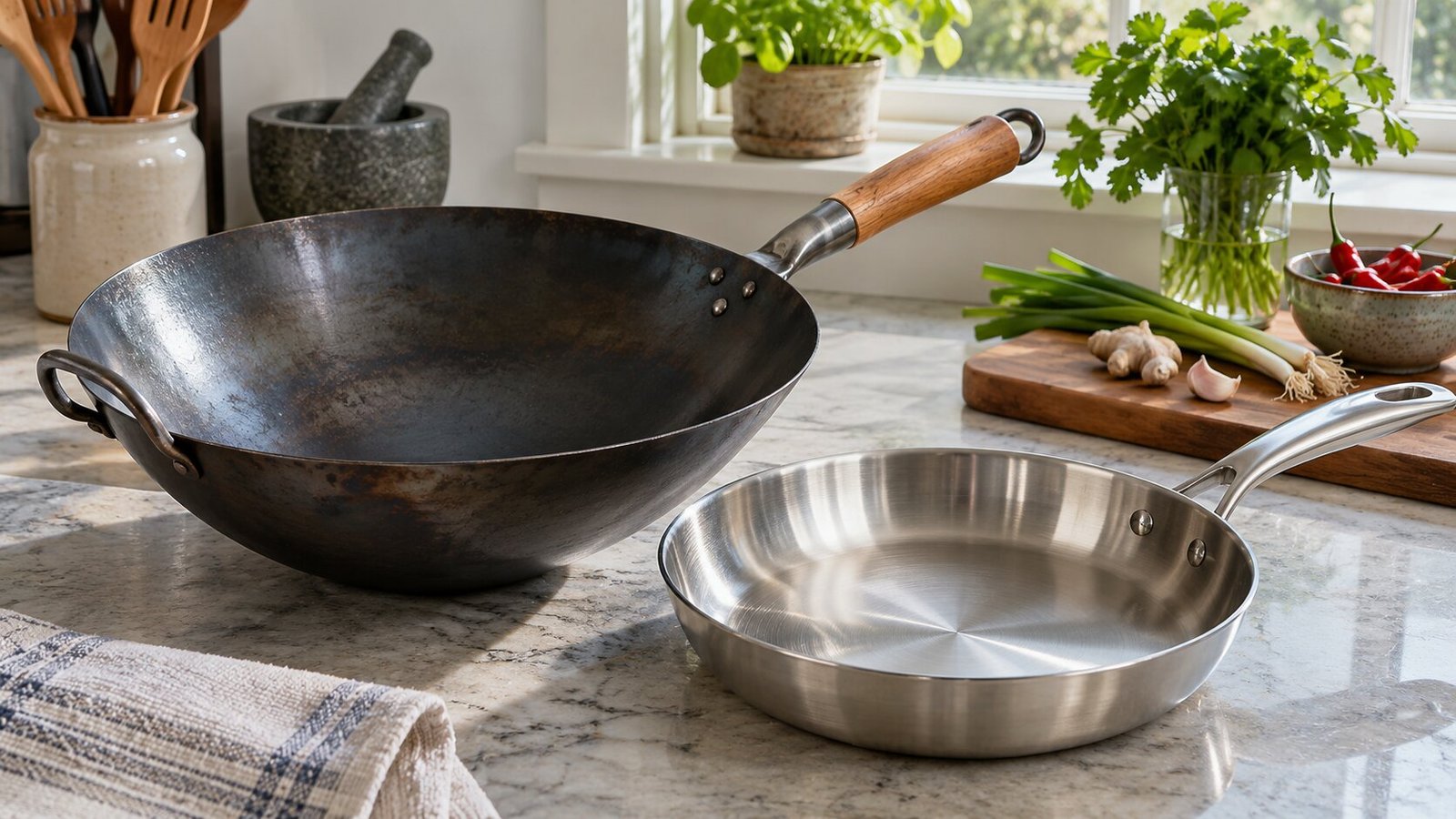
The sloped sides make it easy to toss and move ingredients away from the hottest area. On a flat cooktop, choose a stable flat-bottom model sized for the burner, then stir-fry in small batches.
Choose a skillet for even contact
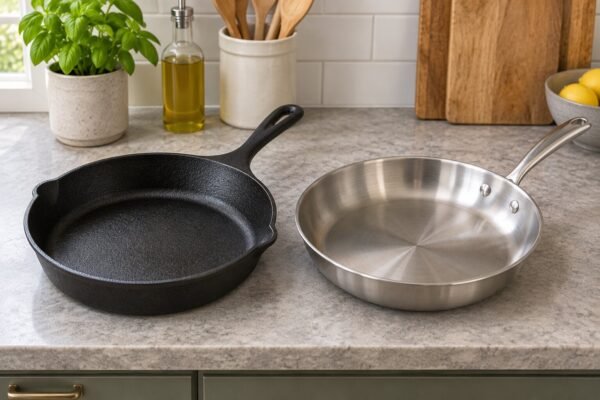
A skillet gives several cutlets or vegetable slices room to brown face down. Stainless steel also works well for acidic pan sauces, since a splash of wine or lemon can lift browned bits after searing.
Compare cleanup
A carbon steel wok usually benefits from seasoning and thorough drying. Follow the maker’s instructions, especially for coated handles or dishwasher use.
Match the base to the burner
Compare the diameter of the flat part that actually sits above the burner. The upper rim of a wok can be wide even when its base is small. A skillet with the same rim diameter may have considerably more flat cooking surface. On a flat cooktop, set a flat-bottom wok down and check whether it rests steadily without rocking. Compare its base with the hob’s recommended pan-size range. On induction, check that the manufacturer lists the specific pan as compatible and that its base meets the size requirements of your hob. A broad upper opening offers room to toss, but it does not change how much metal is in contact with a flat burner.
A stainless steel skillet also needs a compatible base, and its flat area should match the jobs you use it for. If a large pan extends well beyond the burner, the edges may heat more slowly than the center. Compare the area you can fill with cutlets or sliced vegetables without having them touch. For a skillet that will cook a meal for one person, a smaller base may be easier to heat evenly and clean. For a wok, choose a stable base that you can move with confidence while the pan contains food. Check the weight with the lid if you plan to use one.
Use the wok for small, fast batches
The sloping sides make it easy to turn small pieces and move a cooked portion away from the hottest part of the pan for a moment. Set out ingredients before heating the wok. Cut vegetables to sizes that suit the time they need and keep the sauce ready. When the pan is hot enough for the recipe and the maker’s guidance, add a manageable quantity. If you cannot move the pieces without piling them several layers deep, do the job in batches. The shape gives you room to toss, while a smaller batch lets more pieces actually touch hot metal.
Use this approach for Thai pineapple fried rice with cashews. Loosen the rice before cooking, drain the pineapple and keep the cashews aside until the end. A well-fitted wok lets you lift and turn the grains easily. A skillet is still practical if it is wide enough to fry the rice in a shallow layer. If the wok is unstable on your stove or its small base does not heat effectively, use the skillet and divide the batch. The most important result is that the rice moves freely and the fruit does not leave a pool in the pan.
Use the skillet when flat contact matters
A skillet gives broad pieces a continuous surface to sit against. That is useful when you want to brown several slices and turn each once, as in Korean spicy braised tofu. Put the tofu in one layer with space between the slices so you can lift them with a thin spatula. The flat surface also makes it easy to pour a shallow layer of braising liquid around the pieces. Look for sides low enough to let you turn the food yet tall enough for the volume of sauce or other liquid you usually make.
When using stainless steel for searing, heat and oil the pan according to the recipe and the maker’s directions. Let the first side develop color before lifting it. If it feels stuck, check again once it has had some more contact time. Browned material left after cooking can be useful for a pan sauce. Lower the heat if the pan is very hot and add liquid as the recipe directs, then lift the browned bits with a suitable utensil. If the bits have burned, wipe them out rather than using them. The skillet’s broad base is useful for watching how quickly the liquid reduces.
When you compare two pans in your own kitchen, cook the same small portion of vegetables in each on separate occasions. Note where the vegetables color first, whether you can reach the pieces at the back, and how easily moisture escapes. A pan that performs well for a small portion may still need batches for a family meal. This comparison will tell you more about your burner and cooking habits than comparing rim diameters alone.
Compare cleanup and storage
Check whether the carbon steel wok arrives bare, pre-seasoned or with a coating. Follow the manufacturer’s care instructions for that finish. Bare carbon steel is generally kept dry and maintained with a seasoning layer. Dry it thoroughly after cleaning and store it where moisture will not settle on the surface. A skillet made with stainless steel is usually easier to use when you regularly make a sauce with acidic ingredients. Look at the manual for the handle, finish and dishwasher guidance before deciding how much maintenance fits your routine.
Measure the full pan from the longest handle to the opposite edge. A wok may need more room on a shelf because of its tall sides. A skillet can nest with other pans if the handles allow it. Check that you can lift your preferred pan when it is full, and whether a helper handle makes transferring it easier. If you have space for only one, give priority to the pan that fits the burner and the work you do most weeks. Both can make vegetables and rice, but the way each fits on the stove will affect your experience every time you use it.
Frequently asked questions
Can I stir-fry in a stainless steel skillet?
Yes. Work in small batches, leave some exposed surface and have the ingredients ready to add. Turn the food with a spatula rather than relying on the steep sides of a wok.
Can I use a round-bottom wok on a flat stove?
Follow the cooktop and wok manufacturers’ directions. For a flat cooking surface, a compatible, stable flat-bottom model is usually the simpler match.
Which pan should I buy first?
Choose a skillet if you need room for several pieces to brown face down. Choose a wok if you often cook quickly over a burner that fits its base and you like tossing small portions.