Start by deciding what texture and portion size you want. Plate shape affects the finished waffle and how much counter space the machine needs.
Choose the waffle style you want
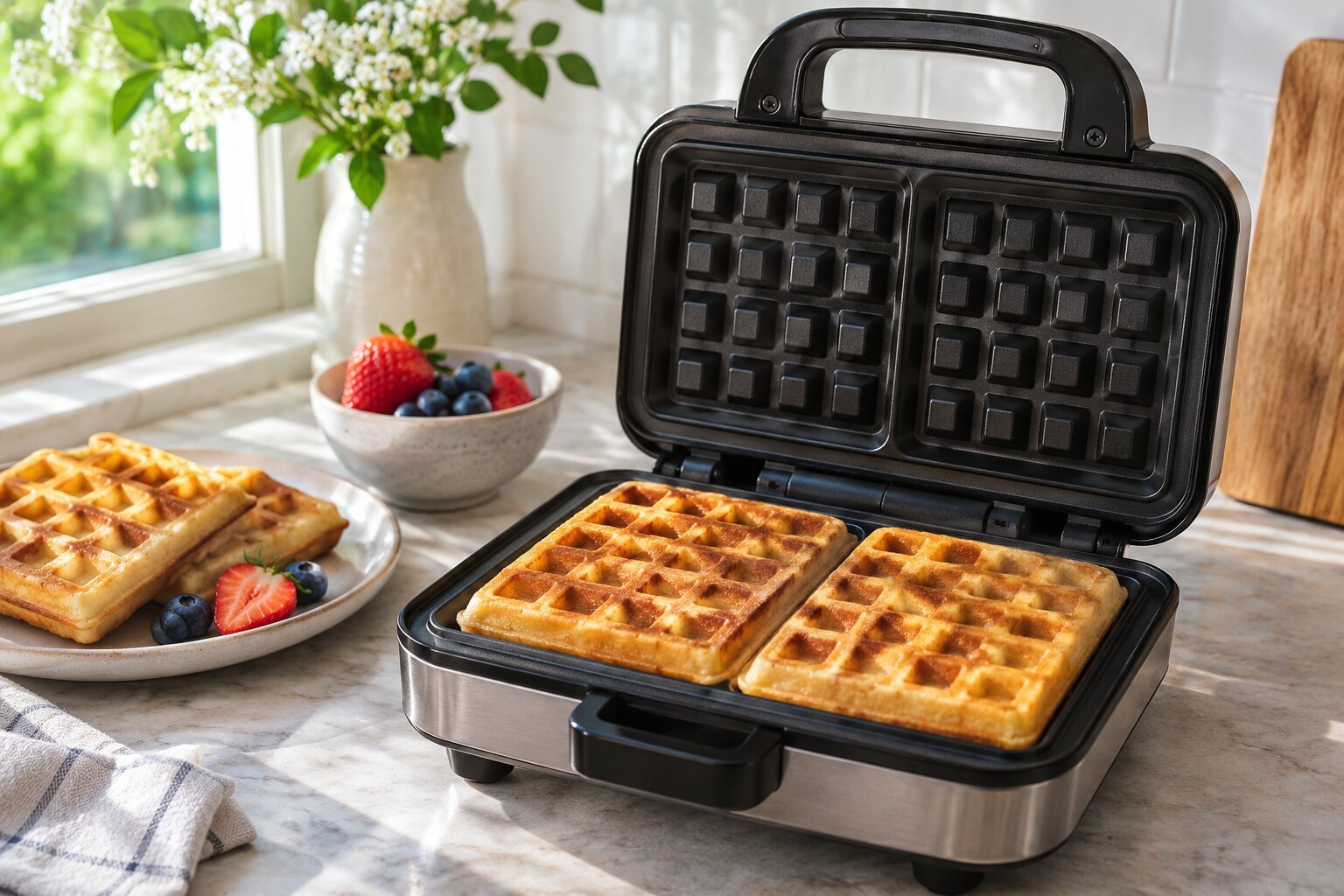
Think of the waffles you would make on a normal weekend. If you want a crisp edge and a thin center that can sit flat on a plate, choose a shallower grid. If you prefer a taller waffle with deeper pockets for fruit or syrup, look at a deeper grid and make sure the batter you normally use can rise to fill it. A deeper grid does not dictate the texture on its own. The batter and the time in the iron still affect how dry the outside gets and how tender the center stays. Compare a photo of a finished waffle from the model with a photo of the open plates if both are available.
Consider shape as well as depth. A round waffle divided into quarters is easy to split between diners. A rectangular plate with several separate squares makes it easier to hand out equal portions or save individual waffles. Small single-waffle machines can work for one or two people, especially if you like smaller breakfast portions. When feeding several people, put more weight on how many portions fit in a batch than on the advertised diameter. A family might get more use out of two moderately sized plates than a single oversized one that makes each person wait their turn.
Estimate your real batch time
Include preheating, filling the plates, cooking and removing the waffles when thinking about speed. A machine that cooks quickly once hot can still take a while to make enough for a table if it only makes one serving at a time. When comparing product listings, check whether the stated capacity refers to one whole waffle, several small pieces, or a single waffle meant to be divided. If you often serve eggs or fruit alongside the waffles, a smaller machine may keep up because each diner needs a smaller portion. For brunch where waffles are the main course, prioritize batch size and an easy refill.
Look for a hinge that opens far enough to scoop batter onto the center of the lower plate without bumping the lid. On larger models, check that you can reach each well with the scoop you use. Find out how the manufacturer recommends measuring the batter. If the quantity is easy to repeat with an ordinary measuring cup, the second and third batches are less likely to overflow. A good fit for your kitchen is the one you can fill, empty and refill repeatedly without having to shift hot parts or move other appliances out of the way.
Compare heat controls and indicators
A simple ready light can tell you when the plates are hot enough for the first pour. Some models also give an audible signal, which helps if you are cutting fruit or setting the table across the room. Find out what each light means. A light that cycles with the thermostat may indicate the heater switching on and off, while a separate timer may signal the end of a preset cycle. Read the manual before treating either as proof that the waffle is browned to your liking. Start with the recommended setting and note how the first batch looks when you lift the lid.
Adjustable browning is worth having if your household likes different textures or you regularly switch between batters. For example, a thin batter in a shallow plate may reach the color you want at a different setting from a thicker batter in deep pockets. A marked dial makes it easier to return to a setting you liked. If you make a single batter every time, a fixed setting can be enough, provided the controls are clear and the machine produces a result you enjoy. For a breakfast appliance with a similar trade-off between useful controls and extra settings, see how to choose a toaster for everyday use.
Plan how you will clean the plates
Look at where excess batter will go if you overfill a well. Some machines leave room for a small overflow channel around the cooking surface. Others have a seam near the hinge that is awkward to reach once batter dries. A channel can make a small spill easier to manage, but it still needs to be wiped out. Check how narrow it is and whether the underside of the lid is easy to see while cleaning. The easiest mess to clean is the one you prevent by following the suggested fill level and increasing it in small increments only if the first waffle comes out undersized.
Removable plates make sense if you cook often or want to wash the grids away from the electrical housing. Look for release buttons you can reach after the machine has cooled and plates that feel easy to align when you put them back. Check the instructions for whether the plates may go in a dishwasher or need hand washing. Fixed plates may still be practical if the grid is open enough to wipe and you rarely overfill. Follow the manual for cleaning the housing and heating surfaces, and use tools recommended for the coating when lifting out waffles.
Measure counter and storage space
Measure the space you have with the lid open as well as closed. A low wall cabinet can block a lid from opening even when the machine fits comfortably on the counter. If you are considering a rotating model, leave room for the handle to travel and check where you will set a plate. Think about where the outlet is and whether the cord can reach without stretching across the work area. For storage, measure the height of the shelf and door opening. If you plan to stand the waffle maker on end, choose a model whose instructions specifically allow upright storage.
Before buying, picture the full routine from taking the iron out of the cupboard to putting it back after it cools. An appliance that is easy to lift and fits near its outlet is more likely to get regular use. If you are building a varied breakfast rather than serving several batches of waffles, make one batch and put out apple and cinnamon baked oatmeal alongside it. That can make a smaller waffle maker practical for a table that would otherwise need a larger one.
Frequently asked questions
Do I need a rotating waffle maker?
A rotating model changes how the batter spreads as you turn the iron, but it also needs clearance for the handle. Consider it if you like how a specific model fills its grid and you have the space to use it comfortably.
Are removable plates essential?
They help if you make waffles regularly or dislike cleaning around fixed grids. If you cook occasionally and the fixed plates are easy to wipe, ease of storage and batch size may matter more.
Should I buy a single or double waffle maker?
Count the servings you want to place on the table at once. For a household of one or two, a single iron can be enough. For a group eating together, compare how many portions each model makes in the first two batches.