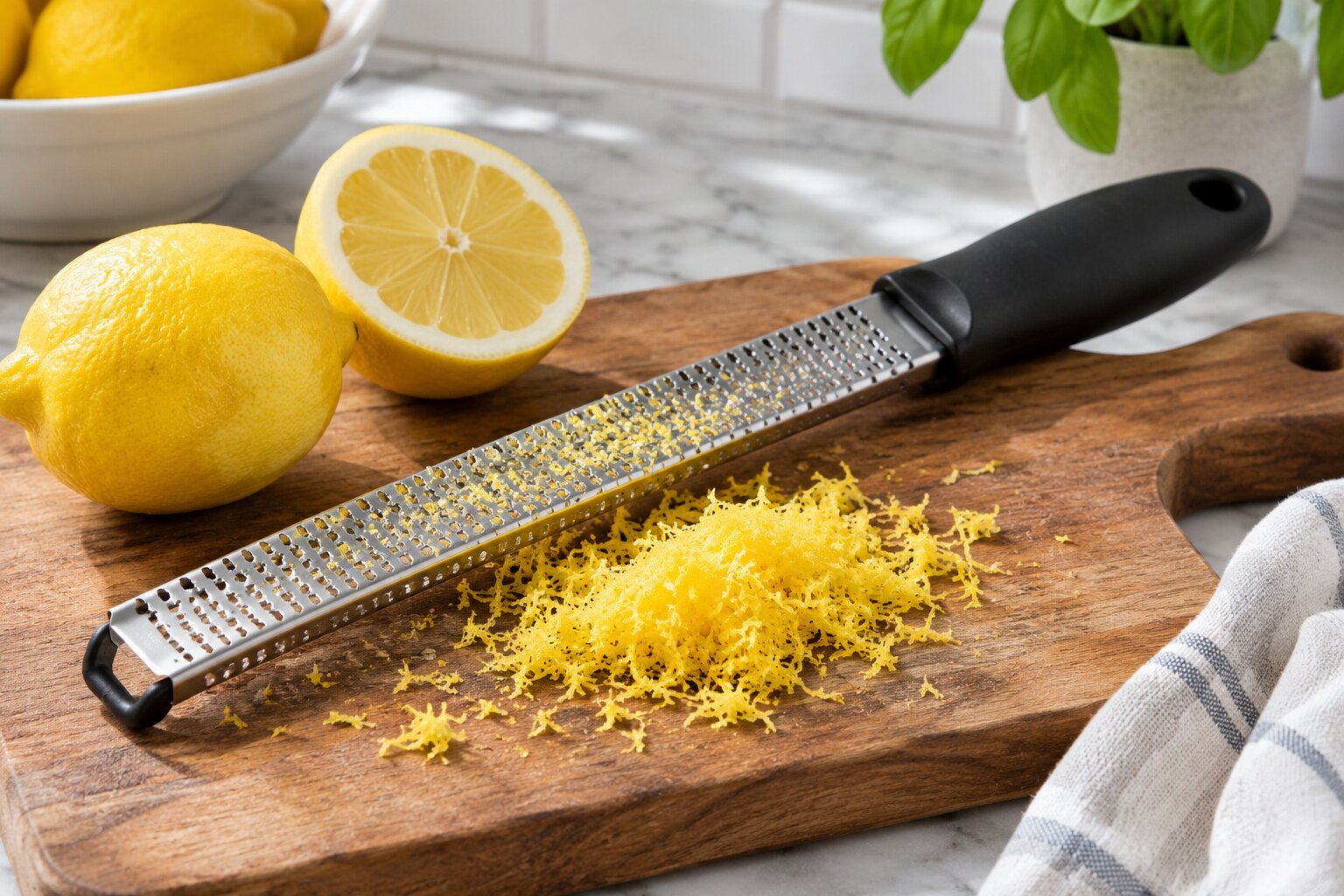
Citrus zest adds fragrance without extra juice. Grate only the colored outer layer and rotate the fruit as soon as you see the pale layer underneath.
Set up a steady surface
Wash and dry the fruit. Hold the grater steady over a board or bowl and use light strokes, keeping your fingers clear of the teeth.
Rotate as you grate
Work around the fruit and stop at the white pith. To make zest easier to collect, grate over a sheet of parchment and tip it into the bowl at the end.
Use and clean it promptly
Stir zest directly into a dressing or rub it into sugar for a cake. Rinse the grater soon after use and clean it according to its manufacturer’s instructions.
Choose a shape for the job
Wash and dry the fruit. Grate the colored skin and stop when you see the pale layer underneath. Set a bowl or pan on the counter as you would for a recipe and look at where the tool has to reach. Some tasks need an edge that can get under food, while others need a surface that follows the wall of a bowl. Match the working part to the place where you will use it most often.
Set a steady board or bowl under the grater. Hold the fruit where your fingers remain well clear of the teeth as it turns. Look at clearance between your grip and the rim of the vessel. You should be able to change angle without striking the side or bending your wrist sharply. Pick a comfortable size for the volume you normally handle. A wider tool covers more surface, while a smaller one gives more control in a small corner or around individual pieces.
Make a quick test in an ordinary recipe
Use light strokes and rotate often. A fresh area gives fragrance without needing to repeat strokes on the same patch. Start with a familiar recipe in your usual bowl or pan so you can tell the effect of the tool from the effect of the ingredients. Watch the center and the edges separately on the first pass. If it misses a strip of food or catches an edge, change the angle or reposition the vessel before pressing harder.
Grate over parchment when you want to measure, or over a recipe bowl if all the zest goes in together. Collect the underside residue carefully. For a second pass, adjust one variable at a time. Move at a different speed, change the angle or try a lighter grip. Stop when the material is moving the way you want. A good fit lets you work with steady small movements. If the base slips or you need to keep changing grip, steady the vessel before continuing.
Choose between two common uses
For lemon ricotta cake, grate zest into the measured sugar and rub it through. That distributes its aroma without making the batter wetter. A recipe example is Italian Lemon Ricotta Cake. Do a small trial first and check how easy it is to reproduce your result with the equipment you already have. The first test is most revealing when it uses a quantity you normally serve.
Greek lemon potatoes use juice for acidity. A little zest at the table can add aroma if desired, but leaves the original cooking liquid unchanged. See Greek Lemon Potatoes with Oregano for another useful example. Compare which stage benefits most from your choice of equipment. Keep an eye on both convenience and the finished texture, especially if the tool makes preparation easier while adding a step later.
Protect the surface and keep the tool usable
Sharp holes do the work. Replace or stop using a damaged grater that snags when you try a light stroke. Check the pan, blade or tool maker’s instructions for materials that can contact it, especially with coated or nonstick surfaces. For work at the stove, consider where you put the tool between uses. Keep handles away from the burner and leave enough space that it cannot fall into the pot while your attention is on the food.
Rinse promptly to release citrus oil and small fragments. Clean in the safe direction and follow the maker’s dishwasher guidance. Wash food from small seams or slots before it dries. Follow the tool’s cleaning instructions and allow narrow parts to dry before putting them away. Store an edge so it does not hit metal utensils when the drawer opens. If it no longer makes a clean movement, look for damage or residue before assuming you need to change your cooking technique.
Decide whether one tool covers everyday use
A fine grater gives shreds that can disappear into batter. A separate channel zester makes long visible strips for garnish. Think through two kinds of preparation you repeat at home. Simulate the motion with the empty cookware first and see how the shape helps or gets in the way. For an occasional job, the tool already in your drawer may work with a different bowl or smaller batch. Select a second one for a recurring task your first one cannot reach or handle reliably.
Choose a size you can hold steadily. A cover or safe storage slot helps protect both the grating surface and your fingers. When buying a tool, handle it or check its actual dimensions if possible. Weight and leverage can matter more than a long list of uses on the package. For storage, check fit in a drawer with the handle and working end included. Give more room to an item that is sharp, awkwardly shaped or easily bent under other heavy tools.
What to check before buying or replacing one
Compare the grater’s grip, sharpness and guard with the way you handle whole fruit. Choose one that stays stable when you rotate a small lemon.
Grate before cutting the fruit for juice. An intact lemon is easier to hold and rotate. If the fruit is very small or the last patch is awkward, stop early rather than bringing fingers close to the teeth.
You can try the basic motion with empty cookware before using food. One short pass should show whether the shape reaches the outside and the middle without twisting your wrist. For the first actual recipe, prepare a small extra amount you can use for a trial. If you change one thing, repeat the same motion and decide whether the tool has helped with the problem you saw.
Use your normal workflow when judging fine grater for citrus zest. Prepare the space first, carry out the most frequent use, then clean and store the item before calling the trial finished. Keep track of any step that becomes easier or any new limitation. Compare at least one other ordinary use before making the decision, since a tool that solves a single fiddly job may be too specialized for the space you have.
Frequently asked questions
Why is the zest bitter?
Some white pith likely came off. Use lighter strokes and move to a new patch as soon as you see a pale surface.
Can I substitute juice for zest?
Juice adds water and acidity. It will not produce the same fragrance or texture in a batter.
Should I grate over the dish or a board?
A board or parchment helps with measurement. Grate over the dish if you can hold the tool safely without risking excess zest.
How finely should zest be cut?
Use fine shreds for batter and dressings. Use thicker strips when the visible garnish and slower release of aroma are what you want.