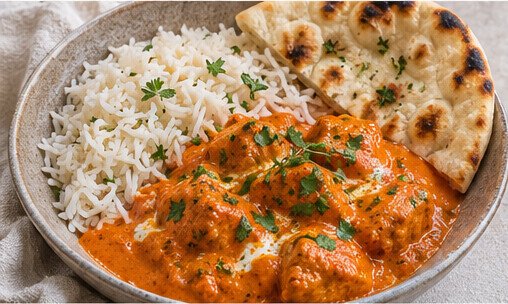
Butter chicken is known for tender pieces of chicken in a smooth tomato sauce enriched with butter and cream. This home version uses a yogurt-spice marinade, browns the chicken separately and finishes it in a gently simmered sauce. The goal is a sauce that feels rich but still tastes of tomato, ginger, garlic and warm spices. Serve it with basmati rice or flatbread to catch every spoonful.
Why This Method Works
Cooking the chicken in batches creates browned edges that add depth to the sauce. The tomato base is simmered until its raw acidity softens before butter and cream are stirred in. This order matters: adding dairy too early can make the sauce harder to balance and more likely to split if boiled. The spice level is intentionally adjustable, since chili powders vary widely in heat.
This recipe is written for a standard home kitchen, with visual and texture cues alongside the timing. Pan size, ingredient temperature and stove strength all affect how quickly food cooks, so use the stated minutes as a guide rather than a substitute for checking the dish. Prep the ingredients before cooking and make small adjustments at the end; that approach is more reliable than trying to correct a sauce or texture after it has gone too far.
Ingredients
Makes: 4 servings | Active prep: 30 minutes | Cooking: 35 minutes. Gather and measure everything before you begin.
- 700 g boneless skinless chicken thighs, cut into bite-size pieces
- 150 g plain yogurt
- 1 tbsp lemon juice
- 1 tsp ground coriander
- 1 tsp garam masala
- ½ tsp turmeric
- ½ tsp mild chili powder, optional
- 2 tbsp butter, divided
- 1 tbsp neutral oil
- 1 medium onion, finely chopped
- 3 garlic cloves and 1 tbsp grated ginger
- 400 g crushed tomatoes
- 120 ml heavy cream
- 1 tsp sugar, optional, and salt to taste
- Cooked basmati rice, cilantro and naan for serving
Ingredient notes
- Chicken thighs remain juicy through browning and simmering. Breast meat is possible; brown it briefly and finish it gently in the sauce.
- Plain yogurt helps the spices cling to the chicken. Choose unsweetened yogurt and avoid very watery varieties; strain it briefly if needed.
- Garam masala blends differ, so smell and taste the finished sauce before adding more. Toasted spices can be strong and fragrant.
- Heavy cream makes a silky finish. For a lighter sauce, use half-and-half, but keep the heat low after adding it.
Equipment and Prep
Use a heavy skillet or Dutch oven with enough surface area to brown the chicken in batches. A blender or immersion blender makes the sauce smooth; if using a countertop blender, cool the sauce slightly and follow the manufacturer’s instructions for hot liquids. Prepare rice in a separate pot while the sauce simmers, and keep a small bowl nearby for measured spices so they are ready when needed.
Before cooking, read through the method once and organize ingredients in the order you will use them. Keep raw meat and seafood separate from ready-to-eat toppings, and wash hands, boards and utensils after they touch raw ingredients. A thermometer is useful for checking poultry; remove it from the heat when the thickest piece reaches a safe temperature. For stovetop recipes, medium heat is a starting point, not a fixed setting: lower it if food darkens before it softens, and raise it only when the pan is dry and ready to sear.
Step-by-Step Method
1. Marinate the chicken
Stir yogurt, lemon juice, coriander, garam masala, turmeric, chili powder if using, and a generous pinch of salt. Coat the chicken, cover and refrigerate for at least 30 minutes or up to 8 hours. Bring it out while the onion cooks, not onto a warm counter for an extended period.
2. Brown the chicken
Heat one tablespoon of butter and the oil in a wide pan over medium-high heat. Lift chicken from the marinade, letting excess drip away, and brown in batches. The pieces do not need to be fully cooked yet. Transfer them to a clean plate.
3. Cook aromatics
Lower the heat to medium. Add the remaining butter and onion. Cook for 6–8 minutes until soft and golden. Add garlic and ginger and stir for about 45 seconds until fragrant, scraping browned bits from the bottom.
4. Simmer the tomato base
Pour in the crushed tomatoes with a pinch of salt. Simmer for 12–15 minutes until the sauce thickens and no longer tastes sharply raw. Stir occasionally; if it sticks, reduce the heat and add a splash of water.
5. Blend sauce and add chicken
Blend the tomato mixture carefully until smooth, then return it to the pan. Add the browned chicken and any juices from the plate. Simmer gently for 8–12 minutes, depending on the size of the pieces, until the chicken is cooked through.
6. Finish with cream
Reduce the heat to low and stir in cream. Taste for salt and balance. A small amount of sugar can round an especially acidic tomato sauce, but add it gradually. Do not boil vigorously after the cream goes in.
7. Serve with rice
Serve over fluffy basmati rice with cilantro and warm naan. Spoon sauce generously over the chicken and offer extra yogurt or cucumber on the side if the sauce is spicy.
Texture and Troubleshooting
Use these adjustments to diagnose the most common changes that can happen in a home kitchen. First identify whether the issue is moisture, heat or seasoning. Changing one factor at a time makes it easier to recover the dish and learn what to do next time.
- A sauce that tastes too acidic may need more simmering before dairy is added. A small pinch of sugar or extra butter can balance it; avoid adding a large amount at once.
- If the sauce is too thin, simmer it uncovered before adding cream, or blend in a few cooked onion pieces.
- A split sauce usually means the heat was too high after adding cream. Lower the heat and whisk in a tablespoon of warm water until it comes back together.
- If chicken browns unevenly, the pan is likely crowded or the marinade is too wet. Cook smaller batches and let the pan recover heat between them.
Easy Variations
The basic method is flexible, but substitutions can change cooking time and moisture. Keep the core balance of salty, bright, rich and fresh flavors in mind. Add watery vegetables early enough for excess liquid to evaporate, and add delicate herbs or dairy near the end.
- For a milder family version, omit chili powder and serve chili oil or sliced green chili separately.
- Use cauliflower florets and chickpeas for a vegetarian tomato-butter curry; roast the cauliflower first for deeper flavor.
- If you do not have cream, stir in a little full-fat coconut milk, noting that it changes the aroma and flavor.
Serving, Storage and Reheating
Serve butter chicken immediately with basmati rice, naan or roti. A crisp cucumber salad or lightly dressed greens contrast with the creamy sauce. Leftovers keep covered in the refrigerator for up to 3 days. Reheat gently on the stovetop with a splash of water; avoid a hard boil after cream has been added. If making ahead, prepare the tomato sauce and marinated chicken separately, then cook and finish them shortly before serving.
For food safety, refrigerate perishable leftovers within two hours, using shallow containers so they cool quickly. Reheat only the portion you plan to eat and bring it until steaming hot throughout. If the dish contains meat, use a food thermometer where practical rather than relying on color alone. These simple steps help preserve texture while keeping make-ahead meals easy to manage.
Recipe at a glance
Yield: 4 servings. Prep: 30 minutes. Cook: 35 minutes. Total time: 1 hour 5 minutes, plus marinating. Start by preparing and measuring the ingredients, follow the cooking order above, then taste and finish with the suggested toppings just before serving.
Frequently Asked Questions
How long should chicken marinate for butter chicken?
Thirty minutes gives the yogurt and spices time to coat the surface. A few hours adds more flavor, but overnight is not necessary for bite-size pieces.
Can I make butter chicken without cream?
You can use evaporated milk or a smaller amount of full-fat coconut milk, though each changes the final flavor. Stir any dairy substitute in over low heat and avoid boiling.
Is butter chicken very spicy?
It can be mild. The warmth comes from spices as much as chili, so omit or reduce chili powder and add heat at the table.
Can I make the sauce ahead?
Yes. Make the tomato base a day ahead and refrigerate it. Reheat until simmering, add browned chicken and finish with cream just before serving.
This Indian recipe is designed as a practical home-cooking guide. Adjust salt and heat to your ingredients and preferences, and use the texture cues in the method for the best result.