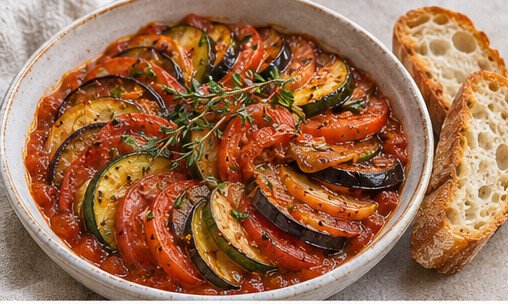
Ratatouille is a vegetable-forward French stew that makes summer produce feel generous and complete. This stovetop version cooks eggplant, zucchini, peppers and tomato in stages so each vegetable softens without turning the whole pot watery. The result is tender but not puréed, with olive oil, garlic and herbs linking the flavors. It is excellent warm with bread and just as useful at room temperature the next day.
Why This Method Works
Different vegetables release moisture and soften at different speeds. Eggplant benefits from an early sauté, while zucchini needs less time and can become mushy if simmered from the beginning. Cooking ingredients in stages gives the tomatoes time to form a sauce while keeping recognizable pieces. A wide pan and uncovered simmer help excess liquid evaporate instead of diluting the flavors.
This recipe is written for a standard home kitchen, with visual and texture cues alongside the timing. Pan size, ingredient temperature and stove strength all affect how quickly food cooks, so use the stated minutes as a guide rather than a substitute for checking the dish. Prep the ingredients before cooking and make small adjustments at the end; that approach is more reliable than trying to correct a sauce or texture after it has gone too far.
Ingredients
Makes: 6 servings | Active prep: 25 minutes | Cooking: 50 minutes. Gather and measure everything before you begin.
- 1 medium eggplant, cut into 2 cm cubes
- 2 medium zucchini, cut into half-moons
- 1 red bell pepper and 1 yellow bell pepper, diced
- 1 large onion, chopped
- 3 garlic cloves, thinly sliced
- 600 g ripe tomatoes, chopped, or canned chopped tomatoes
- 4 tbsp olive oil, divided
- 1 tsp dried thyme
- 1 small bay leaf
- ½ tsp fine salt, plus more to taste
- Black pepper and a small handful of basil or parsley
Ingredient notes
- Choose firm eggplant with glossy skin and a fresh green stem. Salting is optional for modern varieties; if the eggplant tastes bitter, salt cubes briefly and pat dry.
- Ripe tomatoes give a bright, fresh sauce. Canned tomatoes are convenient when tomatoes are out of season; drain some liquid if very watery.
- Cut vegetables into similar sizes for even cooking, but do not make them tiny. Larger pieces hold their shape during the simmer.
- Fresh herbs are best added near the end. Dried thyme can cook longer and season the oil as the vegetables soften.
Equipment and Prep
A wide Dutch oven or heavy sauté pan gives the vegetables room to brown and allows moisture to evaporate. Use a wooden spoon to scrape browned bits from the bottom, and a lid only if the pan is drying before the vegetables are tender. A sharp knife helps make even cubes; tidy cuts matter because pieces finish cooking at similar times.
Before cooking, read through the method once and organize ingredients in the order you will use them. Keep raw meat and seafood separate from ready-to-eat toppings, and wash hands, boards and utensils after they touch raw ingredients. A thermometer is useful for checking poultry; remove it from the heat when the thickest piece reaches a safe temperature. For stovetop recipes, medium heat is a starting point, not a fixed setting: lower it if food darkens before it softens, and raise it only when the pan is dry and ready to sear.
Step-by-Step Method
1. Prepare the vegetables
Prepare and cut all vegetables before turning on the stove. Keep eggplant, zucchini and peppers separate because they enter the pan at different times. If using fresh tomatoes, score and peel them first only if you prefer a smoother sauce.
2. Brown the eggplant
Warm two tablespoons of olive oil in a wide pan over medium-high heat. Add eggplant in a single layer, season lightly and cook for 6–8 minutes until browned in spots and beginning to soften. Work in batches if needed, then transfer to a plate.
3. Cook the zucchini briefly
Add another tablespoon of oil and cook zucchini for 3–4 minutes, turning once. The outside should color slightly while the center remains firm. Move it to the plate so it does not overcook during the longer tomato simmer.
4. Soften onion and peppers
Add the remaining oil, onion and peppers. Cook for 7–9 minutes until the onion is translucent and the peppers have softened. Stir in garlic and thyme for 30 seconds, keeping the garlic pale rather than browned.
5. Simmer the tomato base
Add tomatoes, bay leaf, salt and pepper. Scrape the pan bottom, lower heat to a gentle simmer and cook uncovered for 15 minutes. Stir from time to time; the tomato should reduce into a sauce rather than remain watery.
6. Finish cooking the vegetables
Return eggplant and zucchini to the pan. Simmer uncovered for another 10–15 minutes, stirring gently so the pieces do not collapse. Add a splash of water only if the pan becomes dry before the vegetables are tender.
7. Rest and add herbs
Remove the bay leaf, fold in chopped basil or parsley and taste for salt and pepper. Rest the ratatouille for 10 minutes before serving; the flavors settle and the sauce thickens slightly as it cools.
Texture and Troubleshooting
Use these adjustments to diagnose the most common changes that can happen in a home kitchen. First identify whether the issue is moisture, heat or seasoning. Changing one factor at a time makes it easier to recover the dish and learn what to do next time.
- Watery ratatouille usually means the pan was covered or the tomatoes released extra liquid. Simmer uncovered and give the sauce time to reduce.
- Mushy zucchini comes from adding it too early or cutting thin slices. Use thicker pieces and return them only for the final simmer.
- If the eggplant absorbs all the oil, add it in stages and let the pieces soften before adding more. A small amount of water can help finish it without becoming greasy.
- A flat-tasting stew often needs salt, pepper or fresh herbs. Add lemon only sparingly; the tomatoes should remain the main source of acidity.
Easy Variations
The basic method is flexible, but substitutions can change cooking time and moisture. Keep the core balance of salty, bright, rich and fresh flavors in mind. Add watery vegetables early enough for excess liquid to evaporate, and add delicate herbs or dairy near the end.
- Serve ratatouille over polenta, couscous, pasta or beans to turn it into a substantial meal.
- Add chickpeas near the end for protein, or top servings with a fried egg.
- For an oven-baked version, layer thin vegetable slices over a tomato-onion base and bake until tender, keeping the stovetop method here as the simpler rustic option.
Serving, Storage and Reheating
Ratatouille can be served hot, warm or at room temperature. Pair it with crusty bread, rice, grilled fish or roast chicken. A spoonful of goat cheese or a drizzle of olive oil adds richness if desired. Store in the refrigerator in a sealed container for up to 4 days. Reheat gently, or serve cold as a vegetable side. The flavor often improves after a night in the fridge, making it useful for meal prep.
For food safety, refrigerate perishable leftovers within two hours, using shallow containers so they cool quickly. Reheat only the portion you plan to eat and bring it until steaming hot throughout. If the dish contains meat, use a food thermometer where practical rather than relying on color alone. These simple steps help preserve texture while keeping make-ahead meals easy to manage.
Recipe at a glance
Yield: 6 servings. Prep: 25 minutes. Cook: 50 minutes. Total time: 1 hour 15 minutes. Start by preparing and measuring the ingredients, follow the cooking order above, then taste and finish with the suggested toppings just before serving.
Frequently Asked Questions
Should ratatouille be smooth or chunky?
This method keeps the vegetables in distinct tender pieces. Some regional and family versions are more stew-like; avoid aggressive stirring if you want a chunkier finish.
Do I need to salt eggplant first?
Not usually. Modern eggplant is often mild. If you know yours tastes bitter, salt the cubes for 20 minutes and pat them dry before cooking.
Can I make ratatouille ahead?
Yes. Cool it, refrigerate and reheat gently, or serve at room temperature. The flavors blend as it rests, so it is a good make-ahead side.
Can I freeze ratatouille?
Yes, although zucchini and eggplant may soften more after thawing. Freeze cooled portions in airtight containers and use within a few months for best texture.
This French recipe is designed as a practical home-cooking guide. Adjust salt and heat to your ingredients and preferences, and use the texture cues in the method for the best result.