
Japchae is a festive Korean stir-fry of chewy sweet potato glass noodles, colorful vegetables and a savory-sweet soy sesame dressing. The noodles are pleasantly springy, while individually cooked vegetables keep their color and texture. This flexible recipe can be served warm or at room temperature, making it equally at home at a family dinner, picnic or holiday table.
Ingredients
Serves: 4 as a main or 6 as a side Prep: 20 minutes Cook: 20 minutes
- 8 oz (225 g) Korean sweet potato glass noodles (dangmyeon)
- 6 oz (170 g) sirloin or flank steak, thinly sliced, optional
- 1 medium carrot, cut into fine matchsticks
- 1 small red bell pepper, thinly sliced
- 5 oz (140 g) spinach
- 4 oz (115 g) shiitake mushrooms, sliced
- ½ small yellow onion, thinly sliced
- 2 scallions, cut into 2-inch lengths
- 3 tablespoons soy sauce, divided
- 1½ tablespoons sugar, divided
- 2 tablespoons toasted sesame oil, divided
- 2 garlic cloves, minced
- 1 tablespoon neutral oil, toasted sesame seeds and black pepper
Dangmyeon noodles are made from sweet potato starch and turn translucent when cooked. They are sold dried in Korean and many Asian grocery stores. If omitting beef, add extra mushrooms or pan-fried tofu for a satisfying vegetarian version.
How to make japchae
1. Season the beef and spinach
If using beef, toss it with 1 tablespoon soy sauce, ½ tablespoon sugar, half the garlic and a pinch of pepper. Set aside. Blanch spinach in boiling water for 30 seconds, rinse under cold water and squeeze dry. Season it with a few drops of sesame oil and a pinch of salt.
2. Cook vegetables separately
Warm a little neutral oil in a skillet over medium-high heat. Cook onion for 2 minutes until just translucent; transfer to a large bowl. In the same pan, cook carrot and pepper for 2 minutes, then mushrooms for 3–4 minutes until tender. Transfer each to the bowl. Cook the beef last, stirring until browned and just cooked through.
3. Boil the glass noodles
Cook noodles in boiling water according to the package, usually 6–8 minutes, until chewy and transparent. Drain and rinse briefly under cool water. Use kitchen scissors to cut the long strands into shorter lengths. Return the noodles to the warm skillet and toss with remaining soy sauce, sugar, sesame oil and garlic for 1–2 minutes.
4. Toss and finish
Add spinach, cooked vegetables, beef and scallions to the noodles. Toss over low heat for a minute until evenly mixed and warmed through. Taste and adjust soy sauce, sugar and black pepper. Finish with toasted sesame seeds and serve warm, or cool to room temperature.
Serving and storage
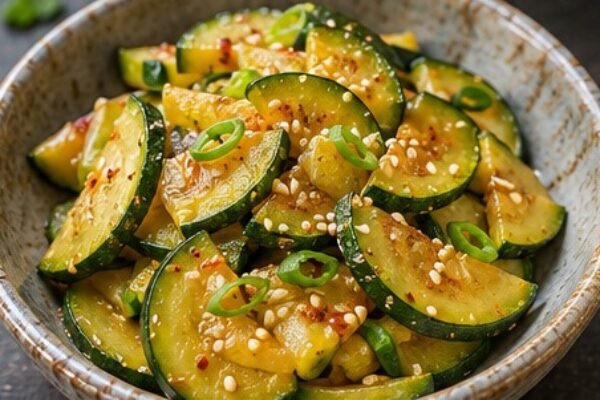
Serve japchae with rice and simple side dishes such as kimchi or quick cucumber salad. For a generous buffet, double the recipe and arrange the noodles in a shallow platter with sesame seeds on top. Refrigerate leftovers in a sealed container for up to three days. Reheat in a skillet with a teaspoon of water and a few drops of sesame oil; the noodles firm as they chill, then soften again when warmed.
Frequently asked questions
Can I make japchae ahead?
Yes. Cook it a day ahead, chill, then reheat gently in a skillet or serve at room temperature.
Are glass noodles gluten-free?
Sweet potato noodles are naturally gluten-free, but check the package and use certified gluten-free soy sauce if needed.
Why are my noodles sticky?
Rinse them briefly after boiling, then toss promptly with sesame oil and sauce. Avoid overcooking.