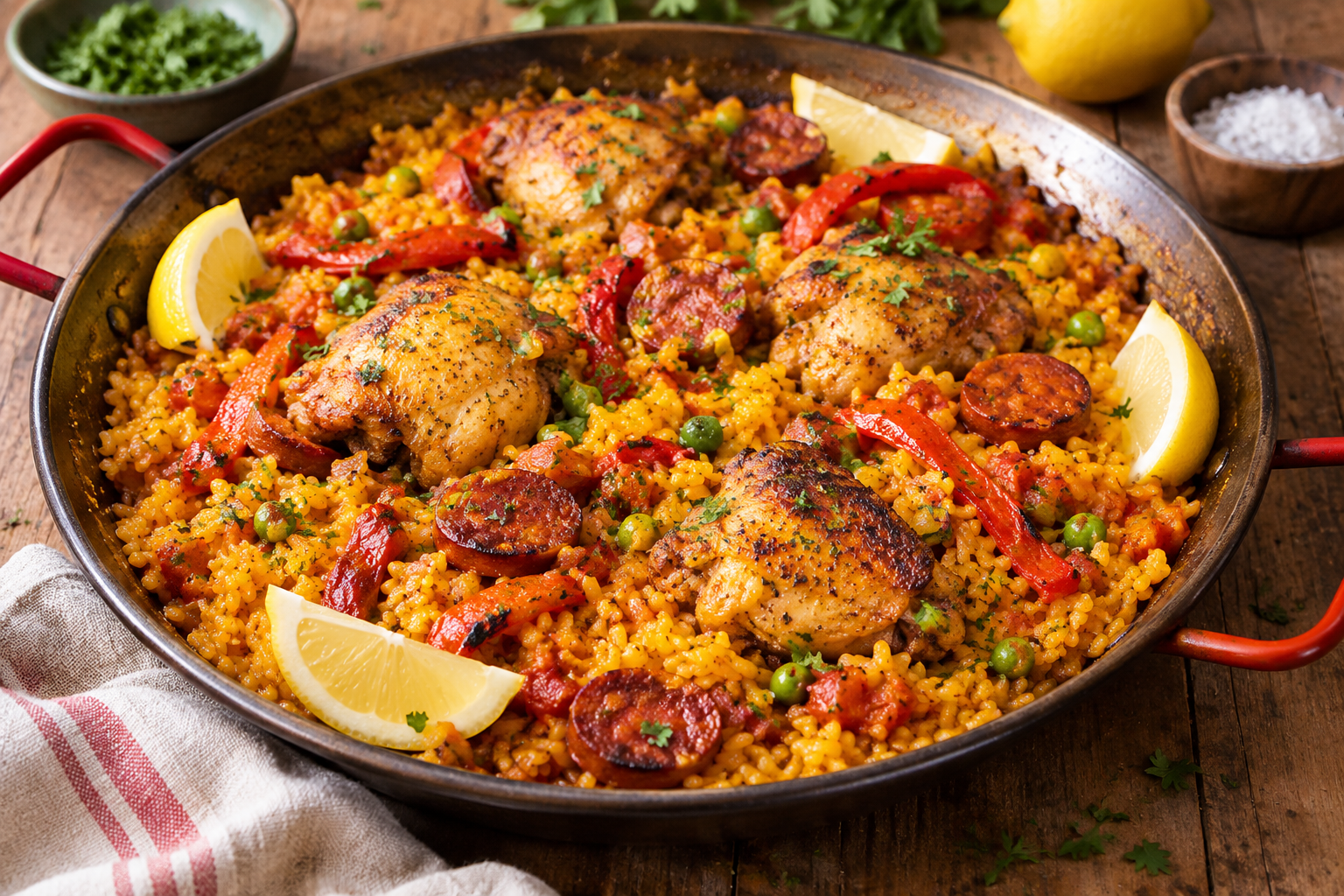
This home-style chicken and chorizo paella brings saffron-scented rice, browned chicken, sweet peppers, and smoky sausage together in one wide pan. It is designed for a regular stovetop and everyday ingredients, with clear cues for when to add stock and when to leave the rice undisturbed.
On this page
Ingredients That Build Flavor
Chicken thighs stay juicy through the simmer, while bone-in pieces add extra flavor if you are comfortable adjusting their cook time. Chorizo contributes paprika-rich oil, so brown it briefly and let that fat season the vegetables. Use Spanish-style cured chorizo, not soft Mexican chorizo, which behaves differently in the pan.
Short-grain rice such as Bomba is ideal because it absorbs liquid while keeping its shape. Arborio can work in a pinch, though it may turn creamier. Saffron gives the rice its distinctive aroma and golden hue; a small pinch is enough. Smoked paprika, onion, garlic, tomato, and chicken stock round out the base. Warm the stock before pouring it in so the pan returns to a simmer quickly.
Chicken and Chorizo Paella Recipe
Prep: 20 minutes Cook: 35 minutes Serves: 4
Ingredients
- 1 tablespoon olive oil
- 1 pound boneless, skinless chicken thighs, cut into 1½-inch pieces
- 4 ounces Spanish chorizo, sliced
- 1 small yellow onion, finely chopped
- 1 red bell pepper, diced
- 3 garlic cloves, minced
- 1 medium tomato, grated, or ½ cup crushed tomatoes
- 1 teaspoon smoked paprika
- ¼ teaspoon saffron threads, crumbled
- 1½ cups short-grain rice
- 4 cups warm low-sodium chicken stock
- ½ cup frozen peas, thawed
- Salt and black pepper
- Lemon wedges and chopped parsley, to serve
Instructions
- Heat oil in a wide 12-inch skillet over medium-high. Pat chicken dry, season lightly, and brown for 3–4 minutes per side; transfer to a plate.
- Add chorizo and cook 2 minutes until its edges color. Stir in onion and pepper and cook 5 minutes until softened. Add garlic for 30 seconds.
- Stir in grated tomato and cook until thickened, about 3 minutes. Add smoked paprika, saffron, and rice; stir for 1 minute to coat each grain.
- Pour in warm stock and taste the liquid for salt. Arrange chicken evenly in the pan and bring to a gentle simmer.
- Cook uncovered without stirring for 18–22 minutes, rotating the pan occasionally for even heat. Add peas during the final 5 minutes.
- When the rice is tender and most liquid has evaporated, remove from heat. Cover loosely and rest 5 minutes. Serve with lemon and parsley.
How to Get the Rice Right
Use a pan wide enough for the rice to sit in a fairly shallow layer. A deep pot traps steam and makes it harder to cook the grains evenly. Once stock is added, resist the urge to stir like risotto. Stirring releases starch and changes the texture; instead, rotate the skillet gently if one side is cooking faster.
Keep the heat at a lively but controlled simmer. If the liquid disappears while the rice is still chalky, add warm stock or water in small splashes around the edge. If the rice is nearly tender but too wet, cook uncovered for a few more minutes. Every burner and pan differs, so use the grain as your final guide rather than relying only on the clock.
A lightly toasted bottom layer is welcome, but burnt rice is not. Listen for the simmer to become quieter near the end and check an exposed grain. Remove the pan once the rice is tender with a little bite. The short rest finishes the texture without overcooking.
Tips and Variations
For seafood, replace chicken and chorizo with peeled shrimp and firm white fish, adding seafood near the end so it does not overcook. For a vegetable version, use artichoke hearts, green beans, and butter beans; choose vegetable stock and check seasoning because beans absorb salt. A handful of roasted red pepper can add sweetness, while a pinch of chili flakes gives gentle heat.
If using bone-in chicken, brown it thoroughly and simmer until cooked through before adding the rice, or use an instant-read thermometer to confirm poultry reaches 165°F (74°C) in the thickest part. Avoid overcrowding during browning; work in batches so the chicken sears instead of steams. Choose low-sodium stock because chorizo and stock can both be salty.
Serving and Storage
Bring the pan to the table with lemon wedges, parsley, and a crisp green salad. Paella is satisfying on its own, so keep sides light. Refrigerate leftovers within two hours in a shallow covered container and use within 3–4 days. Reheat until steaming hot, adding a splash of stock to loosen the rice. More safe-storage details are available in the FoodSafety.gov storage chart.
Explore more dishes in our Spanish recipes collection or try our chicken tinga tacos for another weeknight meal.
Frequently Asked Questions
Can I use long-grain rice?
You can, but the texture will be less traditional and it may need less liquid. Check the package guidance and begin checking early.
Do I need a paella pan?
No. A wide, shallow skillet works well for a home version. The key is an even layer of rice and steady heat.
Why should I avoid stirring?
Leaving rice undisturbed helps it cook evenly and develop a lightly toasted bottom. Stirring can make the grains release excess starch.
Can I prepare it ahead?
Paella is best just cooked, but you can chop ingredients and warm the stock in advance. Cook the rice shortly before serving.
Choosing Rice and Stock
Short-grain paella rice differs from long-grain varieties because its plump grains absorb flavorful liquid while retaining a pleasant bite. If you find Bomba rice, follow the quantity in this recipe; other varieties may absorb liquid at a different rate. Do not rinse rice unless the package specifically recommends it. The thin starch coating helps the grains take on flavor as they simmer.
Stock quality matters because it becomes the sauce for every grain. Use a mild, unsalted or low-sodium stock and season after adding it. If your stock is strongly flavored, dilute it with a little water so it does not overpower saffron and chorizo. Blooming saffron in a spoonful of warm stock for a few minutes can help disperse its aroma evenly.
Common Paella Problems
If the rice is undercooked but the pan is nearly dry, add a small splash of hot stock around the edge and continue simmering. Avoid adding a large amount at once, which can make the bottom soggy. If the rice is tender while there is still a little liquid, let it cook uncovered briefly and then rest the pan; the grains will absorb some moisture as they settle.
If the bottom starts to scorch before the top is cooked, lower the heat and rotate the pan. A thin layer of toasted rice can be delicious, but blackened rice tastes bitter. If your pan is larger than the burner, rotating it every few minutes helps compensate for uneven heat. If it is smaller, cook in a single layer and avoid piling the rice too deeply.
Planning the Meal
For a relaxed dinner, measure the rice and stock, chop the vegetables, and slice the chorizo before turning on the stove. The cooking stage moves steadily once the rice goes in, so having everything ready makes it easier to keep the simmer gentle. You can make the tomato and vegetable base ahead and refrigerate it, then reheat it before adding rice and warm stock. Do not cook the rice in advance if you want the best texture.
Paella is naturally a shared meal. Set out lemon wedges, parsley, and a simple salad so guests can finish their own portions. Let the pan rest for a few minutes before serving; this gives the rice time to settle and makes portions easier to lift. For a balanced table, add grilled vegetables or a crisp salad with a sharp vinaigrette rather than another heavy side.